

 English
 русский
 Français
 Español
 عربى

HEPA Filters for Reliable Cleanroom Air Purification and Controlled Environments
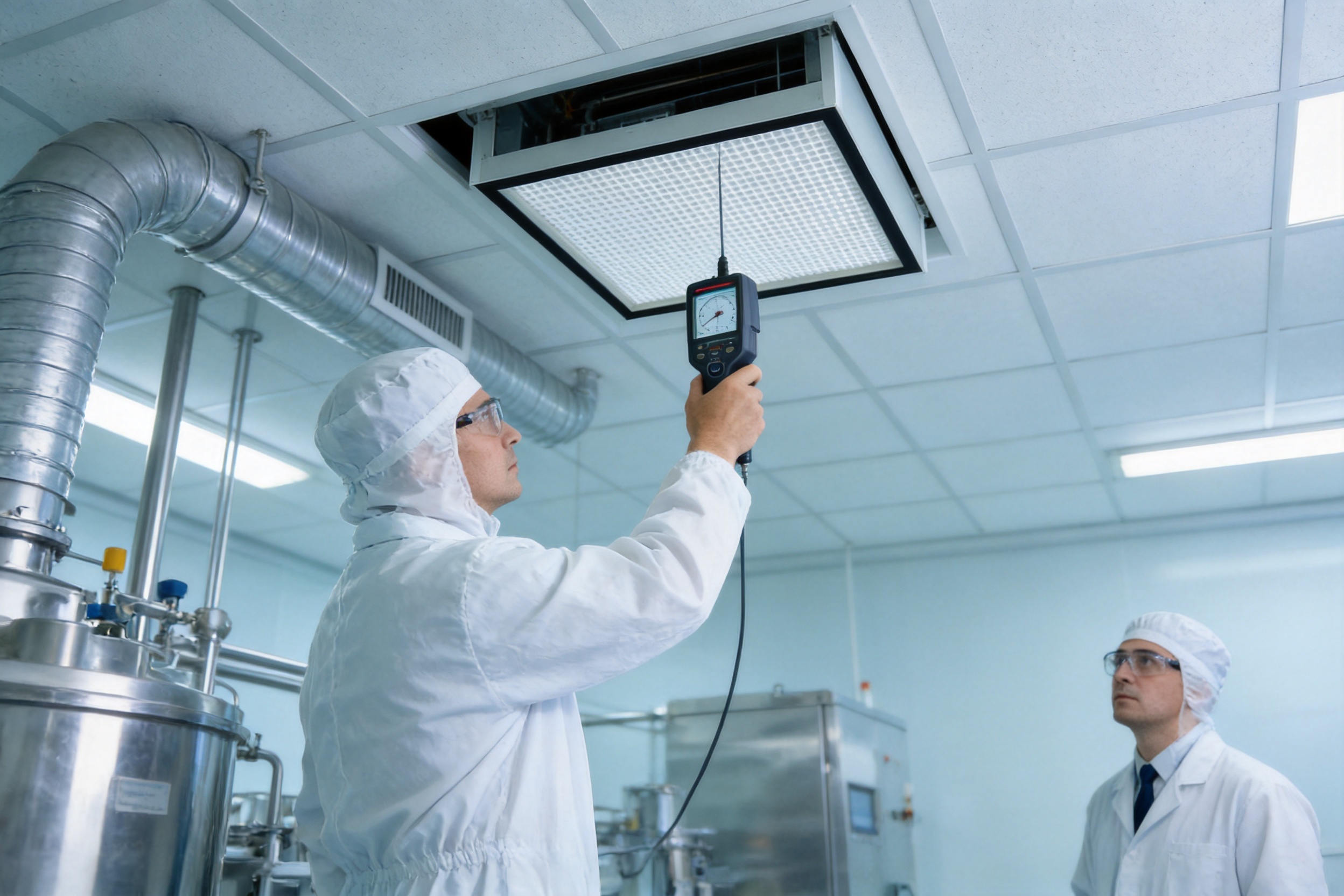
High-efficiency particulate air filtration is one of the most important elements in a cleanroom air-handling system. Whether the application is pharmaceutical manufacturing, healthcare, laboratory research, electronics production, food processing, or precision industrial assembly, the quality of the filtration system directly influences environmental cleanliness, product protection, process stability, and personnel safety. A well-selected HEPA filter helps remove airborne particulate contamination and supports the air quality required by controlled environments.
Pharma United Co., Ltd. provides HEPA filters for cleanroom HVAC systems and specialized cleanroom equipment. These filters are intended for use in pharmaceutical factories, laboratories, hospitals, operating rooms, food workshops, electronics cleanrooms, air showers, pass boxes, laminar airflow units, and weighing booths. As part of a broader cleanroom engineering portfolio, the filters can be integrated into new cleanroom projects, renovation programs, and equipment-based air purification applications.
The value of a HEPA filter is not determined only by the filter media. Reliable performance depends on the complete product, including the frame, separators or separator-free structure, gasket arrangement, sealant, airflow compatibility, installation method, inspection process, and maintenance strategy. For this reason, a qualified manufacturer must combine filtration knowledge with engineering capability, production control, and project experience.
Pharma United combines cleanroom product manufacturing with turnkey cleanroom design, construction, and installation services. This integrated capability allows the company to understand how a filter performs as part of an entire air distribution system rather than as an isolated component. The result is a more coordinated approach to filter selection, equipment matching, installation, commissioning, and long-term maintenance.
Understanding the Function of a HEPA Filter
A HEPA filter is a high-efficiency air filter designed to remove very small airborne particles from an air stream. Unlike a simple dust filter, a HEPA filter is engineered for applications where ordinary filtration is not sufficient. It is commonly installed in supply-air systems, terminal filtration units, laminar airflow equipment, air showers, pass boxes, and other devices that require highly purified air.
Airborne particles may come from people, materials, packaging, building surfaces, equipment wear, process activities, outdoor air, and previous stages of the HVAC system. In a cleanroom, even small quantities of particulate matter can affect product quality or compromise a sensitive process. Filtration therefore works together with room pressure control, airflow organization, personnel procedures, cleaning, material transfer, and environmental monitoring.
The filter media captures particles through a combination of mechanisms. Larger particles may be intercepted by fibers, while smaller particles can be captured through diffusion and inertial impaction. The precise filtration behavior depends on the media construction, fiber arrangement, airflow speed, particle characteristics, and filter design. A HEPA filter is not simply a screen with holes; it is a carefully engineered depth-filtration structure.
In a typical cleanroom supply system, air passes through prefilters and medium filters before reaching the HEPA stage. The preliminary stages remove larger particles and protect the high-efficiency filter from premature loading. This staged arrangement can extend service life, stabilize pressure drop, and improve the overall operating economy of the HVAC system.
The product information associated with this range includes primary filters, medium filters, HEPA filters, and ULPA filters. This enables project designers to select a suitable filtration hierarchy according to the cleanliness class, application, airflow arrangement, and required level of protection.
Why HEPA Filtration Matters in Cleanroom Applications
Cleanrooms are designed to control airborne contamination, but the room itself cannot remain clean without a dependable supply of filtered air. The HVAC system continuously introduces, recirculates, and removes air. If the final filtration stage is incorrectly selected, damaged, poorly sealed, or improperly installed, the room may not achieve the intended cleanliness condition even when the panels, doors, and internal finishes are properly constructed.
HEPA filtration supports several important cleanroom objectives:
First, it reduces the concentration of airborne particles entering the controlled area. This helps protect exposed products, components, materials, and process surfaces.
Second, it contributes to a stable clean-air supply for terminal filtration systems and unidirectional airflow equipment. In applications such as weighing booths or laminar airflow units, the filter is central to the controlled airflow path.
Third, it supports contamination-control strategies in high-risk environments. Pharmaceutical production, sterile preparation, healthcare procedures, and laboratory work all require careful control of airborne contamination.
Fourth, it helps maintain repeatable production conditions. A cleanroom with stable and predictable filtration performance is easier to monitor, qualify, operate, and maintain.
Finally, high-efficiency filtration can improve the performance of modular cleanroom equipment. Air showers, pass boxes, and compact clean air units depend on appropriate filters to deliver the desired air quality within a limited enclosure or chamber.
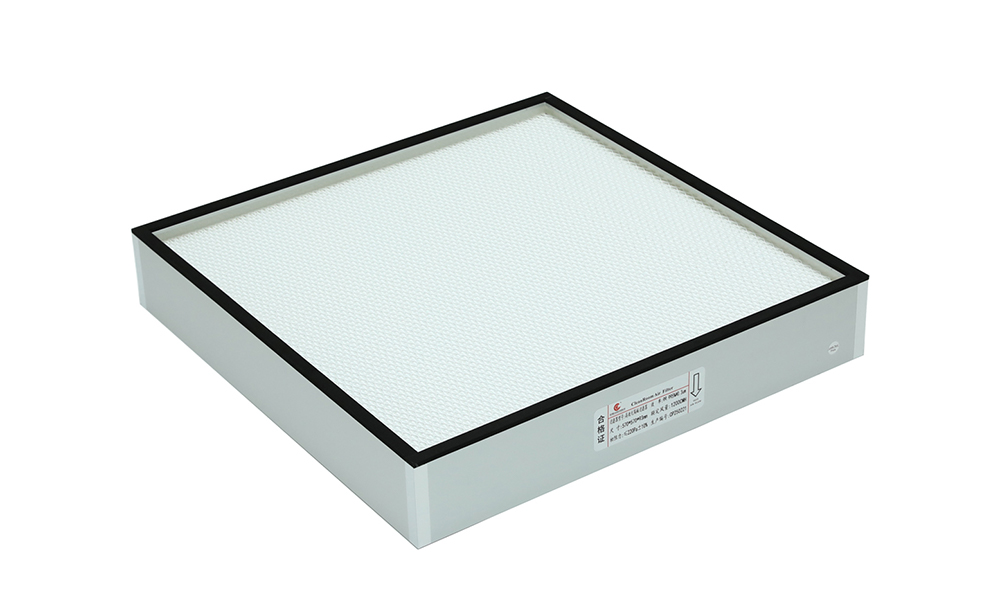
HEPA Filter
Applications of HEPA Filters
Pharmaceutical Manufacturing
Pharmaceutical factories use high-efficiency filtration to protect raw materials, intermediate products, finished products, and critical processing areas. Depending on the process, HEPA filters may be used in dispensing rooms, weighing booths, formulation areas, filling rooms, packaging spaces, and other controlled zones.
In a pharmaceutical facility, filtration is normally considered as part of a wider contamination-control plan. Room classification, pressure cascades, personnel flow, material flow, cleaning procedures, and environmental monitoring must all be coordinated. A filter supplier with cleanroom engineering experience can help ensure that the filter dimensions, airflow direction, installation details, and maintenance access are suitable for the overall system.
Laboratories
Laboratories often require controlled air conditions to protect experiments, samples, instruments, and operators. HEPA filters can be incorporated into laboratory HVAC systems, biological safety-related equipment, clean benches, and specialized enclosures. The design must reflect the laboratory’s purpose and should be coordinated with exhaust requirements, airflow patterns, and safety procedures.
Hospitals and Operating Rooms
Healthcare areas require carefully controlled ventilation to reduce airborne contamination and support a safer environment for patients and medical personnel. Operating rooms and other critical areas may use terminal HEPA filtration, laminar airflow systems, or specialized air-handling arrangements.
In healthcare projects, the filter system must be selected together with the room layout, air change strategy, pressure relationships, temperature and humidity requirements, and maintenance plan. A reliable frame and sealing arrangement are especially important because bypass leakage can undermine the performance of the filter media.
Food Workshops
Food processing areas use controlled air systems to reduce airborne contamination and support hygienic production. HEPA filtration can be valuable in areas where exposed products, sensitive ingredients, or high-care operations require a cleaner air supply.
The filter housing and surrounding construction should be compatible with the cleaning and sanitation procedures used in the facility. Access, condensation control, corrosion considerations, and replacement procedures should be reviewed during the design stage.
Electronics Cleanrooms
Electronics manufacturing is sensitive to particles that can affect wafers, components, assemblies, optical surfaces, and precision equipment. HEPA filters are widely used in cleanroom ceilings, fan filter units, mini-environments, and specialized clean air equipment.
For electronics applications, the filter system must support uniform airflow and low contamination levels. The selection should also take account of heat loads, equipment layout, ceiling configuration, maintenance access, and the possible use of higher-efficiency ULPA filtration in particularly demanding areas.
Air Showers and Pass Boxes
Air showers and pass boxes are compact cleanroom devices that depend on filtered air to control contamination during personnel or material transfer. HEPA filters are commonly integrated into these units to provide clean air for the internal chamber or air-jet system.
Because the available space in these devices is limited, the filter must be selected according to the equipment’s airflow, fan capacity, access arrangement, and replacement method. A correctly sized filter helps the unit maintain effective air movement without imposing unnecessary resistance on the fan.
Laminar Airflow Units
Laminar airflow units provide a controlled stream of clean air over a work surface or process zone. The HEPA filter is generally installed upstream of the work area and forms the final barrier between the supply air and the protected zone.
Uniformity is important in this application. The filter, diffuser, screen, fan, and enclosure must work together to provide the intended airflow pattern. Any gap, deformation, or installation error can disturb the airflow and create localized contamination risks.
Weighing Booths
Weighing booths are used in pharmaceutical, chemical, food, and industrial applications where powders or other materials are handled. A weighing booth may need to protect the product, the operator, the surrounding room, or all three.
HEPA filtration can support the clean-air supply and help capture or control airborne particulate matter generated during weighing. The final design should be based on the material characteristics, containment strategy, airflow direction, extraction arrangement, and cleaning requirements.
Product Construction and Engineering Considerations
A high-quality HEPA filter is a complete engineered assembly. The principal elements commonly include filter media, a supporting frame, sealant, separators or a separator-free media pack, gaskets, protective screens, and labeling. The exact construction can be configured according to the application and equipment in which the filter will be installed.
Filter Media
The media is responsible for particle capture. It must be formed and supported so that air can pass through the filter while the media maintains its integrity under operating conditions. The selection of media should consider filtration efficiency, airflow resistance, humidity, temperature, chemical exposure, cleanability, and expected service life.
For cleanroom applications, media uniformity is important. Variations in the media pack can cause differences in resistance or local stress. Controlled manufacturing and careful handling help reduce the possibility of damage, folds, compression, or contamination before installation.
Frame
The frame provides structural support and establishes the interface between the filter and the air-handling equipment. It may be produced from materials selected for strength, dimensional stability, corrosion resistance, and compatibility with the installation environment.
Dimensional accuracy is important because the filter must fit the housing or terminal unit correctly. A poor fit can create bypass leakage, increase installation difficulty, or prevent the gasket from being compressed evenly. Consistent frame production is therefore a major part of product quality.
Sealant and Gasket
The filter media must be securely sealed to the frame. The gasket or other sealing arrangement must also create a reliable interface with the mounting system. Even highly efficient media cannot provide effective system performance if air flows around the media rather than through it.
For this reason, manufacturing inspection should cover the continuity of the seal, the condition of the gasket, and the absence of visible defects. Installation teams must also ensure that the filter is seated correctly and that fasteners or retaining mechanisms apply suitable pressure without damaging the frame.
Protective Screens
Protective screens can help shield the media from accidental contact during handling and maintenance. They may also support the media pack against airflow forces, depending on the construction. Screens should be secure, clean, and free from deformation that could interfere with airflow or installation.
Labeling and Traceability
Clear product identification supports installation control, maintenance planning, and replacement management. A filter label may include information such as model, dimensions, airflow direction, production identification, and other project-related data, depending on the customer’s requirements.
Traceability is particularly useful in large cleanroom projects where many filters are installed across multiple rooms and systems. Proper records can simplify commissioning, inspection, replacement, and future facility upgrades.
Manufacturing Strengths and Process Control
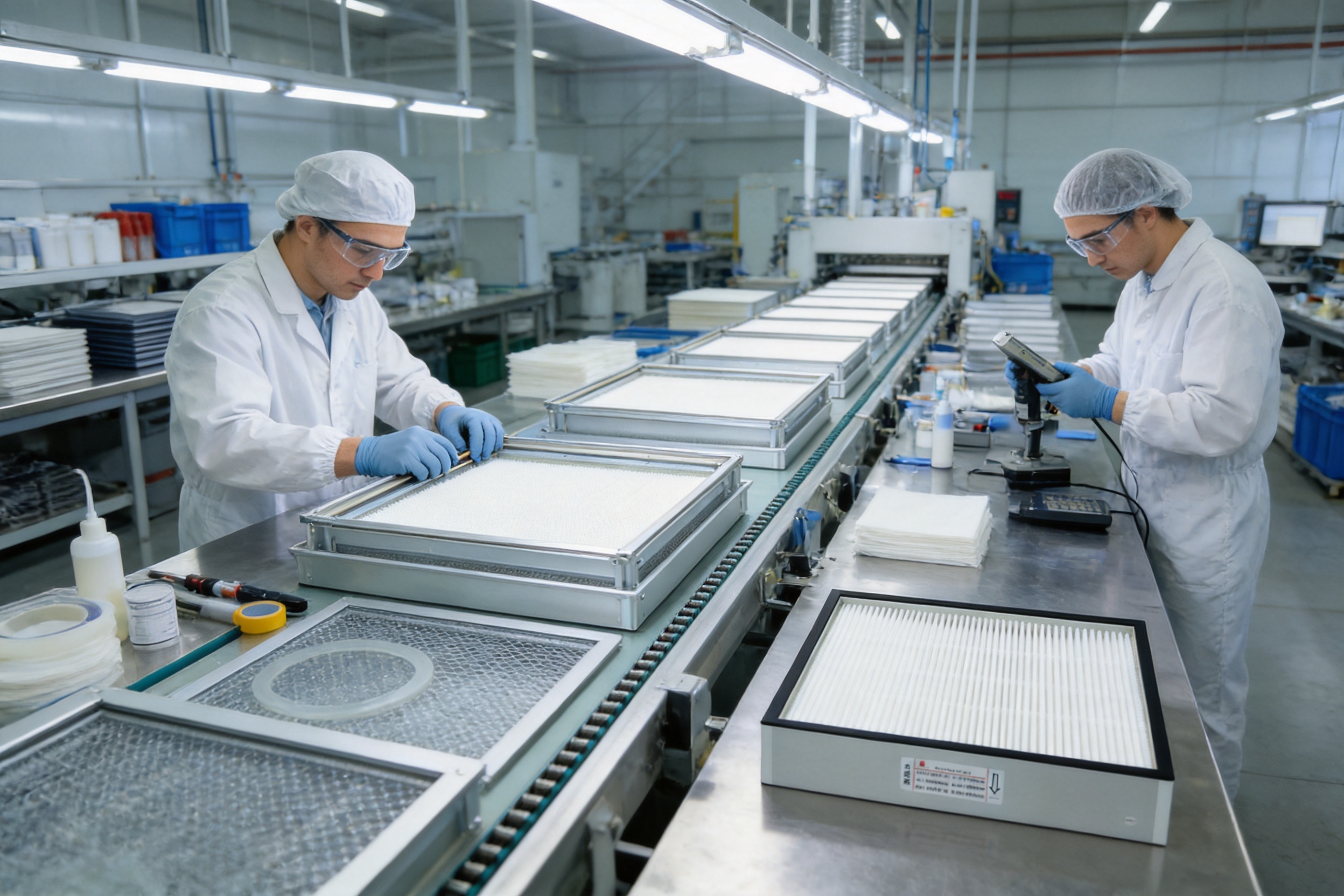
The performance of a HEPA filter depends on disciplined manufacturing at every stage. Pharma United’s broader manufacturing background includes metallic sandwich panels, HPL panels, cleanroom doors and windows, HVAC systems, and cleanroom equipment. This product knowledge supports a system-oriented understanding of filter integration and cleanroom construction.
The company operates its own manufacturing facility and reports a factory area of approximately 20,000 square meters. It also reports more than 60 staff members, an annual output exceeding 1,000 40HQ containers, and more than 20 years of industry experience. These resources provide a foundation for organized production, material coordination, project scheduling, and export-oriented delivery.
Material Receiving and Incoming Inspection
Manufacturing control begins with the receipt of raw materials and components. Filter media, frame materials, sealants, gaskets, screens, packaging materials, and related parts should be checked before entering production. Incoming inspection helps identify dimensional problems, visible damage, contamination, or inconsistencies that could affect the finished product.
Material identification also supports production traceability. When a filter is supplied for a regulated or technically demanding facility, the ability to connect the finished product with its production information can be valuable for quality documentation and project records.
Controlled Media Processing
The filter media must be handled carefully to prevent tearing, creasing, contamination, or uncontrolled compression. Depending on the filter design, the media is formed into a pleated or structured pack to achieve a large effective filtration area within a practical external size.
Accurate forming supports consistent airflow resistance and helps the filter use its available surface area efficiently. Operators must follow defined procedures for handling, forming, bonding, and positioning the media. Careful process control is especially important for large filters and filters intended for terminal air units.
Frame Preparation and Assembly
Frame components must be cut, joined, finished, and inspected according to the required dimensions. The frame should remain square and stable so that the media pack and sealing components can be assembled correctly.
During assembly, the media pack must be positioned evenly within the frame. Uneven loading, excessive stress, or insufficient support can reduce mechanical reliability. The assembly sequence should also protect the filter media from contact with tools, sharp edges, and unnecessary handling.
Sealing and Curing
Sealing is a critical manufacturing step because it prevents air from bypassing the filter media. Sealant must be applied continuously and in a controlled manner. The assembly must then be allowed to cure or stabilize according to the material requirements before further handling or packaging.
Inspection should verify that the seal is complete and that no visible channels, cracks, voids, or separation are present. The gasket should be installed evenly and should remain firmly attached to the frame. These details are essential for reliable field installation.
Final Inspection and Testing
Finished filters should be inspected for dimensions, appearance, frame condition, media integrity, gasket installation, labeling, and packaging. Where required by the project, performance testing and documentation can be arranged according to the applicable specification or customer quality plan.
Testing requirements vary according to application, filter class, project standard, and regulatory environment. A responsible selection process should identify the required test method before production so that the filter is evaluated against the correct criteria.
Pharma United’s experience in cleanroom engineering and international projects supports coordination between product manufacturing and project documentation. This is particularly useful when filters are supplied as part of a complete cleanroom package rather than as stand-alone components.
Advantages Compared with Conventional or Poorly Integrated Alternatives
High-Efficiency Particle Control
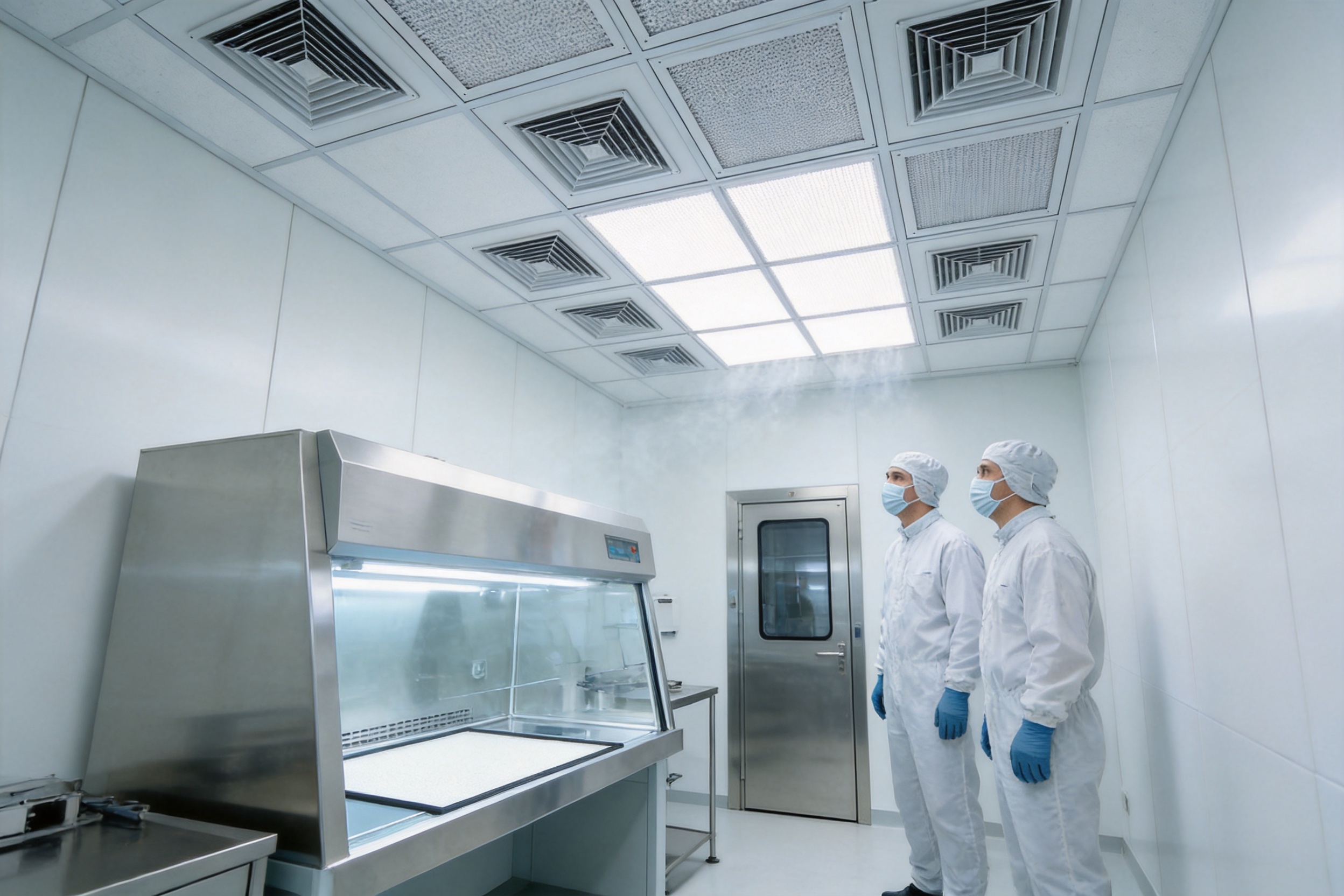
The primary advantage of a HEPA filter over a conventional primary or medium filter is its ability to capture much smaller airborne particles at a substantially higher efficiency. Primary and medium filters remain important because they protect downstream equipment and reduce the loading of the final filter, but they generally cannot replace the high-efficiency stage in critical cleanroom applications.
A properly selected HEPA filter provides a more suitable final barrier for controlled environments. It helps reduce the amount of particulate matter delivered to the room and supports the cleanliness performance of terminal air systems.
System Compatibility
Filters supplied by a manufacturer with cleanroom equipment and engineering experience can be designed with the complete system in mind. This is an advantage over products selected only by nominal dimensions without considering fan capacity, housing depth, gasket type, airflow direction, access requirements, or maintenance procedures.
System compatibility reduces installation complications and helps the filter operate within the intended pressure and airflow range. It can also simplify coordination between the filter, fan filter unit, air shower, pass box, ceiling system, or HVAC ductwork.
Integrated Project Support
Pharma United provides cleanroom design, material manufacturing, and on-site installation services. This integrated structure offers a single engineering interface for projects that include panels, doors, windows, HVAC systems, equipment, and filtration products.
Compared with buying unrelated components from multiple suppliers, integrated coordination can reduce communication gaps. It may also improve the consistency of room interfaces, ceiling layouts, equipment positions, filter access, and commissioning responsibilities.
Customization for Different Applications
Cleanroom projects are rarely identical. Room dimensions, airflow rates, ceiling modules, equipment layouts, environmental conditions, and maintenance strategies vary from one facility to another. A filter solution should therefore be capable of being coordinated with the actual project requirements.
Customization may involve dimensions, frame configuration, gasket arrangement, airflow direction, labeling, packaging, and delivery grouping. The appropriate configuration should be confirmed through technical review rather than assumed from a generic catalog entry.
Manufacturing Capacity and Delivery Coordination
Large cleanroom projects often require many filters in different dimensions and installation locations. Manufacturing capacity, material planning, and packaging control can have a direct effect on construction schedules.
The company’s reported factory capacity and international project experience support the coordination of larger orders and export shipments. Production planning can be aligned with the project schedule, while packaging and identification can be organized to assist site installation.
Experience in International Cleanroom Projects
Pharma United has completed projects across Africa, the Middle East, South Asia, and other international markets. Its company information also identifies work associated with multinational pharmaceutical companies and industrial plants. International project exposure can help a supplier understand different site conditions, communication requirements, documentation expectations, and installation challenges.
The company states that its engineering team has more than 10 years of average on-site experience. This field experience is valuable because practical installation conditions can differ from the assumptions made during product selection. Site access, local construction methods, power conditions, room sequencing, and coordination with other trades must all be considered.
Filter Selection Guidelines
Selecting a HEPA filter should begin with the application rather than the product name alone. The following factors should be reviewed before final approval.
Required Cleanliness Level
The target cleanliness level influences the filtration arrangement and the number of filtration stages. A pharmaceutical filling room, an electronics process area, a laboratory, and a general controlled workshop may not require the same filter configuration.
The filter should be specified as part of a complete contamination-control strategy. The room classification, air changes, airflow pattern, pressure cascade, and monitoring plan should be considered together.
Airflow Rate and Pressure Drop
Every filter creates resistance to airflow. The fan must be capable of delivering the required airflow at the filter’s operating pressure drop, not merely at an unloaded or nominal condition.
If the pressure drop is too high, the system may consume more energy, deliver less airflow, or operate outside the design range. If the filter is too small for the required airflow, face velocity may be excessive and service life may be reduced. Proper sizing balances cleanliness performance, airflow, energy consumption, and maintenance intervals.
Installation Configuration
HEPA filters may be installed in duct systems, ceiling terminal units, fan filter units, air showers, pass boxes, laminar airflow units, and weighing booths. Each application has different space, access, sealing, and airflow requirements.
The supplier should receive accurate information about the mounting orientation, available depth, connection method, gasket position, retaining hardware, and replacement clearance. These details help prevent delays during installation.
Environmental Conditions
Temperature, humidity, chemical exposure, cleaning agents, and corrosive atmospheres can influence filter materials and service life. Food, pharmaceutical, laboratory, and industrial applications may use different cleaning methods or process chemicals.
The filter construction should be reviewed for compatibility with the actual operating environment. If the filter will be exposed to unusual conditions, the customer should communicate these conditions before production.
Maintenance and Replacement
A filter is a consumable component with a finite service life. The facility should establish a method for monitoring pressure drop, checking airflow, inspecting seals, and determining when replacement is necessary.
Replacement access should be considered during the design phase. A filter that performs well but cannot be safely and efficiently replaced may create unnecessary maintenance costs. Proper labeling and installation records help operators identify the correct replacement product.
Installation and Commissioning Practices
Even a well-manufactured filter can fail to deliver its intended performance if it is installed incorrectly. Filters should remain in their protective packaging until the installation area is ready and clean. Personnel should handle them carefully and avoid lifting or carrying them by fragile components.
Before installation, the housing or terminal unit should be inspected. The mounting surface must be clean, level, and free from damage. Any old gasket, debris, sealant residue, or sharp projection should be removed. The airflow direction and filter identification should be confirmed against the project drawings.
The filter should be positioned evenly and secured according to the equipment design. Excessive tightening can deform the frame or gasket, while insufficient tightening can permit bypass leakage. After installation, the filter face and surrounding components should be checked for damage or contamination.
Commissioning may include airflow measurement, room cleanliness testing, pressure verification, visual inspection, and filter integrity testing where specified by the project. The exact commissioning program should follow the applicable standards, customer requirements, and facility qualification plan.
Filter replacement should be performed under controlled conditions. The surrounding area may require additional cleaning or temporary operational restrictions. Used filters should be handled according to the facility’s contamination-control and waste-management procedures.
Energy Efficiency and Lifecycle Value
Energy consumption is an important part of cleanroom operating cost. Fans must overcome the resistance of filters, ductwork, dampers, coils, diffusers, and other system components. A filter with excessive resistance may increase fan energy consumption, while an undersized filter may create high face velocity and shorten service life.
Lifecycle value therefore involves more than the initial purchase price. A suitable filter can support stable airflow, predictable maintenance, reduced disruption, and efficient use of the HVAC system. The best choice is normally the one that balances efficiency, pressure drop, durability, installation requirements, replacement frequency, and project risk.
Prefilters and medium filters play an important role in protecting the HEPA stage. By removing larger particles before the air reaches the final filter, they can help preserve HEPA performance and reduce unnecessary loading. Regular replacement of the earlier stages is an important part of the overall maintenance strategy.
Integrated engineering can further improve lifecycle value. When the filter, HVAC system, cleanroom ceiling, equipment, and room layout are designed together, the project team can reduce conflicts and improve access. This may lower the cost of future maintenance and reduce the chance of contamination caused by improvised modifications.
Quality Management and Project Support
Quality in cleanroom filtration is both a product issue and a project-management issue. The filter must be manufactured correctly, but it must also be specified accurately, transported safely, stored properly, installed correctly, tested appropriately, and maintained according to a defined plan.
Pharma United’s business model combines manufacturing and engineering services. Its product range includes cleanroom panels, doors and windows, HVAC systems, and cleanroom equipment in addition to filters. This portfolio allows the company to coordinate multiple interfaces that might otherwise be handled by separate suppliers.
The company also supports BIM visualization and full installation services. BIM-based coordination can help project teams review room layouts, equipment locations, ceiling grids, filter modules, service zones, and maintenance access before construction begins. Early coordination is especially valuable for complex pharmaceutical and industrial facilities.
For international customers, project communication and documentation are essential. Technical drawings, product schedules, packing lists, installation instructions, inspection records, and commissioning information should be organized clearly. The exact documentation package depends on the project specification and local regulatory requirements.
How to Work with a Filter Manufacturer
Customers can improve the accuracy and speed of quotation and technical review by providing complete project information. Useful details include the application, room function, required cleanliness level, filter dimensions, airflow rate, installation method, fan information, gasket position, operating temperature, humidity, cleaning method, and delivery schedule.
Photographs or drawings of the existing housing can be useful for replacement projects. For new projects, ceiling plans, HVAC drawings, equipment layouts, and room data sheets help the manufacturer confirm the correct configuration.
The manufacturer should clarify which performance values are required and which test reports or certificates are available. Customers should avoid selecting a product only by name or by a single efficiency value. The complete specification must match the project’s design basis and qualification plan.
For turnkey cleanroom projects, the filter discussion should occur early. Filter dimensions affect ceiling modules, terminal units, fan capacity, maintenance clearances, and room coordination. Early decisions reduce the risk of late design changes and construction delays.
Frequently Asked Questions
What is the main purpose of a HEPA filter?
A HEPA filter is used to remove very small airborne particles from an air stream and provide cleaner air for controlled environments. It is commonly used as a final or terminal filtration stage in cleanroom HVAC systems and cleanroom equipment.
Where can these filters be used?
Applications include pharmaceutical factories, laboratories, hospitals, operating rooms, food workshops, electronics cleanrooms, air showers, pass boxes, laminar airflow units, weighing booths, and other controlled environments.
What is the difference between a primary filter, medium filter, HEPA filter, and ULPA filter?
These filter categories represent different levels of air filtration and are used in different stages or applications. Primary and medium filters generally protect the HVAC system and downstream filters by removing larger particles. HEPA filters provide high-efficiency filtration for critical clean air applications. ULPA filters are used where an even higher level of particle removal is required. The correct combination depends on the project design.
Can a HEPA filter be customized?
Many aspects can be coordinated according to the equipment and project requirements, including dimensions, frame arrangement, gasket configuration, airflow direction, labeling, and packaging. Final customization should be confirmed through technical review.
Why is the frame important?
The frame supports the filter media and provides the interface with the housing or terminal unit. A dimensionally accurate and stable frame helps ensure correct installation and uniform gasket compression. A damaged or poorly fitting frame can permit bypass leakage.
Why are prefilters and medium filters used before a HEPA filter?
They remove larger particles before the air reaches the high-efficiency filter. This protects the HEPA media, helps control pressure drop, and can extend the service life of the final filter.
How often should a HEPA filter be replaced?
There is no single replacement interval for every application. Replacement should be based on pressure drop, airflow performance, filter integrity, environmental conditions, operating hours, and the facility’s maintenance program. A filter should also be replaced if it is damaged or cannot pass the required integrity test.
Can these filters be used in an existing cleanroom?
Yes, replacement and retrofit applications are possible when the filter dimensions, housing, airflow, gasket arrangement, and performance requirements are confirmed. Existing equipment should be inspected before a replacement filter is ordered.
Does the company provide more than filters?
Yes. Pharma United provides cleanroom design and construction services as well as metallic sandwich panels, HPL panels, cleanroom doors and windows, HVAC systems, and cleanroom equipment. The company can support integrated cleanroom solutions and on-site installation.
What information should be included in an inquiry?
An inquiry should include the application, quantity, dimensions, airflow requirements, installation configuration, filter efficiency or class, gasket position, operating conditions, delivery location, and any required documentation or testing.
Why choose a manufacturer with cleanroom engineering experience?
A manufacturer with engineering experience can evaluate the filter as part of the complete cleanroom system. This helps coordinate filtration with HVAC capacity, ceiling modules, equipment interfaces, installation access, commissioning, and maintenance requirements.
Conclusion
HEPA filters are essential components in cleanroom HVAC systems and specialized cleanroom equipment. Their function is to remove airborne particles and support the controlled conditions required by pharmaceutical, healthcare, laboratory, food, electronics, and industrial applications. Reliable performance depends on more than filter media; it requires accurate
Product: HEPA Filter



-
Mobile
+86-177 1554 8238
-
E-mail
chin@pharma-united.com
-
Address
No.58 Beiyuan Road, Dianshanhu Town, Kunshan City, Jiangsu Province, China
Copyright © Pharma United Co., Ltd. Rights Reserved.
OEM/ODM Cleanroom Engineering Solution Manufacturers
