

 English
 русский
 Français
 Español
 عربى

Laminar Air Flow Equipment for Reliable Localized Clean Working Areas
Introduction
Laminar Air Flow equipment is designed to create a localized clean working area by delivering HEPA-filtered air in a controlled, unidirectional pattern. In laboratories, pharmaceutical facilities, hospitals, electronics plants, food-processing areas, and other contamination-sensitive environments, the quality of the air surrounding the product or process can directly influence safety, performance, and compliance.
Unlike a conventional room ventilation system, a laminar air flow unit focuses clean air where it is most needed. It forms a controlled work zone above or around the operating surface, reducing the risk that airborne particles will settle on exposed materials, components, instruments, or products. This localized approach can support contamination control without requiring the entire surrounding room to operate at the same cleanliness level.
The Laminar Air Flow supplied by Pharma United Co., Ltd. is developed as part of a broader cleanroom engineering portfolio. The product can be integrated into pharmaceutical, healthcare, industrial, and laboratory projects, either as a standalone unit or as one element of a complete cleanroom solution. Its customized size, stainless steel construction, and compatibility with configurable filtration, fan, monitoring, and control systems allow it to be adapted to different process requirements.
A successful laminar air flow installation is not determined only by the presence of a filter and fan. Airflow uniformity, internal geometry, material selection, access, maintenance, monitoring, installation quality, and compatibility with the surrounding cleanroom all influence performance. For this reason, equipment selection should be supported by engineering analysis and a clear understanding of the intended application.
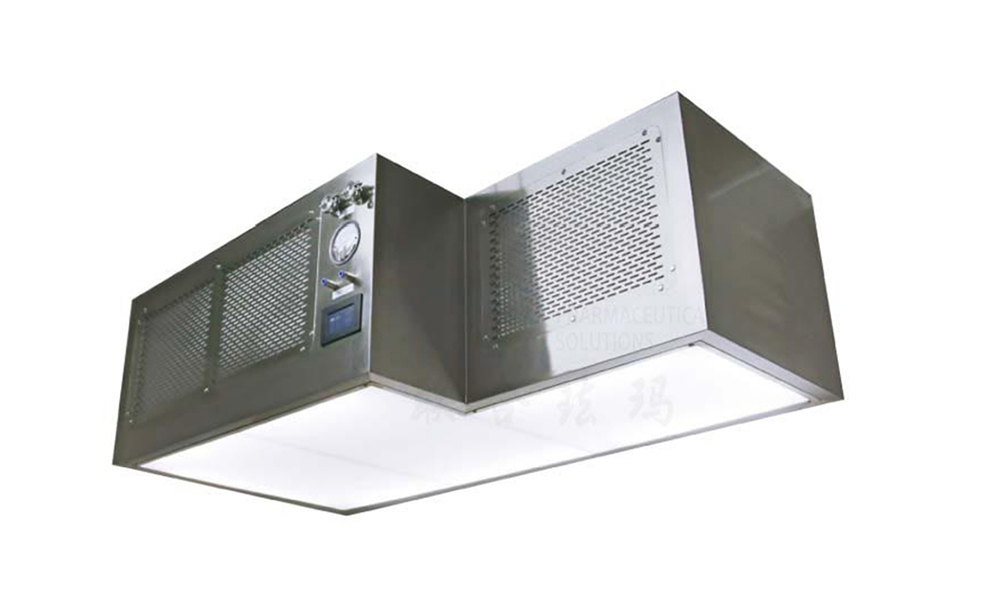
Laminar Air Flow
What Is Laminar Air Flow?
Laminar air flow refers to a controlled air movement pattern in which air travels in a generally uniform direction with limited turbulence. In a clean working area, the air is typically drawn into the unit, passed through a high-efficiency particulate air filter, and discharged across the work zone as a continuous clean air stream.
The purpose is not simply to circulate air. The primary purpose is to create a protective air barrier or clean air zone that reduces the concentration and movement of airborne particles near critical operations. When correctly designed and used, the air stream helps prevent contaminants from entering the working area and helps sweep particles away from the exposed process.
Laminar air flow equipment is commonly configured in two basic arrangements. In a horizontal configuration, filtered air travels from the rear of the unit toward the operator or front opening. In a vertical configuration, filtered air travels downward from the upper section toward the work surface. The most suitable arrangement depends on the process, the material being handled, operator interaction, equipment placement, and contamination-control strategy.
The term “laminar” describes the intended flow behavior, but real-world performance depends on the complete design. Obstructions, open containers, large instruments, excessive operator movement, poor loading practices, or unbalanced airflow can disturb the clean air pattern. A well-designed unit therefore needs to combine an appropriate airflow path with a practical work area, smooth internal surfaces, suitable access, and effective commissioning.
Laminar air flow should also be distinguished from a biological safety cabinet. A laminar air flow unit is primarily intended to protect the product, component, or process from airborne contamination. A biological safety cabinet is designed for more specific personnel, product, and environmental protection requirements related to biological hazards. The correct equipment must be selected according to the risk assessment and applicable standards.
Core Operating Principle
The operating principle of the equipment can be summarized in several stages. First, room air enters the unit through an intake path. Depending on the configuration, the intake may include a pre-filter or other preliminary air-cleaning stage to reduce the dust load reaching the main filter. The air is then moved by a fan or blower through the internal plenum.
Next, the air passes through a HEPA filter. The filter removes very fine airborne particles from the air stream. The filtered air is distributed across the clean air supply face and enters the work zone in a controlled direction. The clean air stream continuously replaces the air around the exposed process, helping reduce the chance of particle settlement or uncontrolled crossflow.
Finally, air leaves the work zone through the front, rear, or lower return path, depending on the equipment configuration. Some units recirculate air within the local environment, while others may be connected to a wider HVAC or exhaust arrangement. The final design must consider heat generation, room pressure relationships, process emissions, and whether the application requires recirculation or discharge.
Airflow velocity must be selected carefully. Excessive velocity may create turbulence, disturb lightweight materials, increase evaporation, or interfere with the process. Insufficient velocity may reduce the protective effect of the clean air zone. The correct operating range should therefore be established through engineering design, testing, and the requirements of the intended application.
Main Product Features
Localized HEPA-Filtered Protection
The principal advantage of the Laminar Air Flow is its ability to provide a clean working zone without requiring the entire room to be maintained at the same local airflow condition. This can be especially valuable when only one process, workstation, or exposed product requires a high level of particle control.
HEPA filtration is a central component of this protection. The final filter captures fine particles from the air before the air enters the work zone. Filter selection, sealing, installation, and testing are all important. A filter with suitable nominal efficiency may still perform poorly if the gasket is damaged, the frame is distorted, or bypass leakage occurs around the filter.
Pharma United approaches the unit as part of an engineered cleanroom system rather than as an isolated metal enclosure. This perspective supports better coordination between the laminar air flow unit, room layout, HVAC supply, pressure cascade, personnel movement, and material flow.
Stainless Steel Construction
The listed main material for the unit is SS304 stainless steel. This material is widely used in cleanroom and hygienic applications because it offers good corrosion resistance, a smooth cleanable surface, and compatibility with routine sanitation procedures. Stainless steel also provides a durable appearance and can withstand the frequent cleaning associated with pharmaceutical, laboratory, healthcare, and food-processing environments.
Material selection affects more than appearance. Internal surfaces should be designed to reduce dust accumulation and avoid unnecessary ledges, sharp corners, gaps, and difficult-to-clean joints. A smooth, well-finished interior helps cleaning personnel maintain the unit and supports repeatable hygiene practices.
SS304 is suitable for many general cleanroom applications. However, the chemical environment, cleaning agents, temperature, humidity, and process materials should be reviewed before final material approval. Where a project involves aggressive chemicals, high chloride exposure, or special corrosion conditions, an alternative material or upgraded finish may need to be evaluated during the engineering stage.
Customized Dimensions
The product information identifies the size as customized. This is a significant practical advantage because laminar air flow workstations are often constrained by the process, room dimensions, door access, equipment arrangement, and operator requirements.
A customized size may be developed around the number of operators, the dimensions of the product, the required working depth, the position of instruments, the available ceiling height, and the desired integration with surrounding panels or laboratory furniture. Custom dimensions can also support special pass-through arrangements, wall-mounted installations, floor-standing units, or modular cleanroom layouts.
Customization should not be limited to external dimensions. The internal working height, filter face size, fan location, access panels, lighting, electrical outlets, control interface, drain arrangements, and maintenance clearances may all require review. A well-coordinated design can improve usability and reduce later modifications at the project site.
Configurable Monitoring and Control
The available product information lists the filter, fan, airflow sensor, differential-pressure gauge, and PLC as configurable or project-dependent items rather than fixed standard values. This allows the equipment to be matched to the actual requirements of the application instead of forcing every customer to accept one universal specification.
A fan or blower should be selected according to the filter resistance, required airflow volume, pressure drop, work zone dimensions, and expected operating conditions. The fan should provide stable performance over the useful life of the filter. Variable-speed control may be considered when the process requires adjustment, energy optimization, or compensation for filter loading.
An airflow sensor can help users monitor whether the unit is operating within the required range. A differential-pressure gauge may be used to indicate the pressure difference across the filter or another defined section of the system. These instruments support preventive maintenance by providing an early indication of filter loading, airflow reduction, or abnormal operating conditions.
A PLC or other control system can be selected for applications requiring centralized operation, alarms, interlocks, data recording, or integration with a wider building management system. Smaller installations may require a simpler control panel, while regulated production facilities may benefit from more comprehensive monitoring and documentation.
Advantages Compared with Basic or Standardized Alternatives
Application-Based Engineering
One common weakness of low-cost or standardized air flow cabinets is that they may be selected solely by external size and nominal fan capacity. Such an approach can overlook the process risk, air pattern, maintenance requirements, and relationship between the equipment and the room.
An application-based design begins with the intended use. The engineering team considers what is being protected, how operators will interact with the workspace, what materials will be placed inside, how often the unit will be cleaned, and what level of monitoring is expected. This produces a more useful solution than simply choosing a catalog item with the closest dimensions.
Pharma United combines cleanroom product manufacturing with project engineering. This makes it possible to coordinate the laminar air flow unit with cleanroom panels, doors, windows, HVAC systems, equipment layouts, and installation conditions. The result can be more consistent than purchasing unrelated components from several suppliers with different design assumptions.
Better Integration with Cleanroom Projects
A standalone unit may function adequately in a small laboratory, but larger pharmaceutical or industrial projects often require coordination between equipment and building systems. The equipment may need to align with room partitions, ceiling grids, material transfer routes, electrical systems, lighting, pressure controls, and validation activities.
As an integrated cleanroom supplier, Pharma United can support the wider project context. The company’s product range includes metallic sandwich panels, HPL panels, cleanroom doors and windows, HVAC systems, and other cleanroom equipment. This broad portfolio can reduce interface problems between the localized clean air unit and the cleanroom envelope.
Integration may improve project responsibility as well. When the same engineering organization coordinates the equipment and cleanroom, it becomes easier to clarify dimensions, connection points, utility requirements, installation sequences, and commissioning responsibilities. This can help reduce delays caused by incomplete technical information.
Hygienic Material and Cleanable Design
Competitors that rely on low-grade painted steel, unsuitable internal finishes, or difficult-to-clean construction may create additional maintenance work. The use of SS304 for the primary structure supports a more hygienic and durable solution for many applications.
Cleanability is also influenced by the details. Internal corners, fasteners, access panels, filter frames, work surfaces, and cable entries should be designed with routine sanitation in mind. Where the process requires frequent disinfection, the selected sealants, gaskets, surface finishes, and electrical components should be checked for compatibility with the cleaning method.
These considerations can produce long-term benefits. A unit that is easy to clean may reduce downtime, support more consistent housekeeping, and make it easier for operators to follow standard operating procedures.
Flexible Specification
Some competing products are sold with fixed components that may not suit every project. A fixed fan, fixed filter arrangement, or non-expandable monitoring package can make it difficult to meet local standards or specific customer requirements.
The configurable nature of this Laminar Air Flow allows the project team to define the appropriate filter type, airflow measurement, pressure monitoring, control system, and physical arrangement. This is especially helpful for international projects, where electrical standards, documentation requirements, room classifications, and validation expectations may differ.
Customization should always be controlled through approved technical documentation. Flexibility is valuable only when the final specification is clearly defined, reviewed, manufactured, tested, and documented.
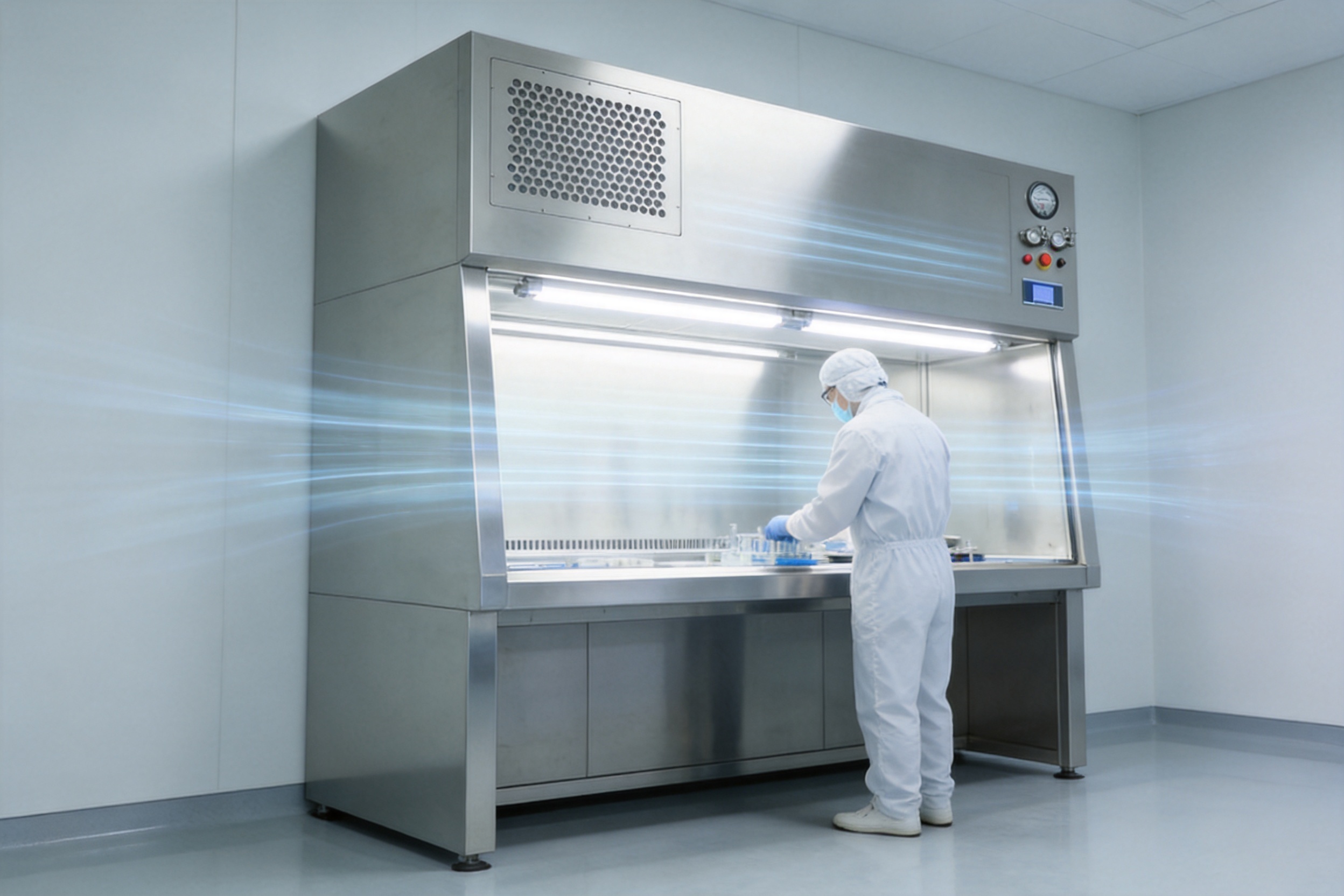
Advanced Manufacturing Approach
Engineering Review and Technical Development
The manufacturing process begins before sheet metal is cut. A technical review establishes the equipment purpose, size, airflow direction, filter arrangement, control requirements, installation method, and interface with the surrounding project.
For customized equipment, engineering drawings should define the external envelope, internal plenum, filter frame, access doors, work surface, cable routing, lighting, fan location, and maintenance access. Three-dimensional coordination can be particularly useful when the unit is installed within a modular cleanroom or positioned beside other equipment.
Pharma United’s engineering team has more than ten years of average on-site experience. This field experience is valuable because manufacturing decisions are informed by practical installation and operation conditions. Details that look acceptable in a drawing may be difficult to assemble, clean, or service at the project site. Engineers with installation experience are more likely to identify such issues before production.
Material Preparation and Fabrication
SS304 sheet and structural components are prepared according to approved drawings and material specifications. Accurate cutting supports dimensional consistency and reduces unnecessary joints. Forming, bending, and fabrication should be controlled so that panels fit correctly and internal surfaces remain smooth.
Welding and joining methods should be selected according to the material thickness, appearance requirements, strength, and cleanability. Welded areas may require grinding, polishing, or finishing to remove rough edges and reduce locations where dirt can collect. The final treatment depends on the visible and internal finish specified for the project.
During fabrication, protective films or temporary coverings may be used to reduce scratches and handling damage. Components should be stored and moved in a way that avoids contamination before assembly. This is particularly important for filter frames, finished work surfaces, and exposed internal panels.
Internal Airflow Plenum Construction
The plenum is the section that distributes air from the fan to the filter face. Its geometry can strongly influence airflow uniformity. Poorly designed plenums may create areas of excessive velocity, dead zones, or pressure imbalance across the filter.
A properly coordinated plenum supports even loading of the HEPA filter and a stable discharge pattern. Baffles, diffusers, screens, or other distribution elements may be considered where needed. The selection depends on the unit size, fan characteristics, filter dimensions, and required airflow profile.
Sealing is equally important. Any uncontrolled bypass around the filter or through panel joints can reduce the effectiveness of the clean air zone. Filter frames and gaskets should therefore be installed with appropriate compression and inspected during assembly.
Fan and Filter Coordination
The fan and filter should be treated as a matched system. The fan must overcome the resistance of the filter, internal components, and any connected ductwork while still delivering the required airflow. If the fan is undersized, airflow may be inadequate. If it is oversized or operated without suitable control, the unit may generate excessive noise, turbulence, or energy consumption.
Filter selection may depend on the required particle-control level, dimensions, pressure drop, replacement method, and project standards. The product information identifies the filter as project-dependent, which is appropriate because different applications may require different filter sizes, classifications, or testing arrangements.
The replacement method should be considered during design. Maintenance staff need enough access to remove and install the filter without damaging surrounding surfaces or exposing the clean area to unnecessary contamination. A clear replacement procedure can reduce service time and improve maintenance safety.
Control Panel and Instrumentation Assembly
Where sensors, gauges, or PLC controls are included, these components should be installed in a way that supports operator visibility and maintenance access. Control panels may include fan start and stop functions, lighting controls, alarm indicators, airflow adjustment, filter status, and emergency stop functions, depending on the project requirements.
Instrumentation should be selected and calibrated according to its intended use. A display that is easy to read at the operating position can help personnel recognize abnormal conditions quickly. In regulated environments, measurement devices may also require calibration certificates and defined calibration intervals.
The control architecture should be proportionate to the application. A simple laboratory unit does not necessarily require a complex PLC system. Conversely, a pharmaceutical production area may require alarms, access control, data logging, and integration with facility monitoring systems. The customizable design allows these decisions to be made during engineering rather than after installation.
Quality Control and Factory Testing
Quality control should cover materials, dimensions, fabrication, assembly, electrical safety, airflow, and documentation. The exact inspection plan depends on the final specification, but several general stages are important.
Incoming material inspection verifies that stainless steel and other components correspond to the approved requirements. Dimensional inspection confirms that fabricated parts match the drawings. Visual inspection checks surface condition, weld quality, edge finishing, sealant application, and cleanliness.
Assembly inspection verifies that the fan, filter frame, controls, lighting, sensors, and access panels have been installed correctly. Electrical checks may include wiring verification, grounding, insulation testing, functional operation, and alarm testing where applicable.
Airflow testing is essential for a laminar air flow unit. Depending on the project, testing may include airflow velocity measurements, velocity uniformity, smoke visualization, filter integrity testing, particle counting, noise measurement, and recovery or cleanliness assessments. The final test plan should be agreed with the customer and based on the intended classification and use.
Factory acceptance testing can help identify issues before shipment. It may include a review of external dimensions, component labels, control functions, instrument readings, access clearances, and packing condition. For international projects, factory testing can reduce the risk of discovering major nonconformities only after the equipment arrives at the installation site.
Cleanroom Project Integration
Laminar Air Flow equipment performs best when the surrounding environment supports its intended airflow pattern. The room should be reviewed for supply diffusers, return grilles, doors, operator traffic, nearby equipment, and pressure relationships. Strong room drafts or poorly positioned air-conditioning outlets can disturb the localized clean air zone.
The location of the unit should also support logical personnel and material flows. If operators must frequently cross in front of the unit, open doors beside it, or place packaging materials directly in the airflow path, the contamination-control benefit may be reduced. A proper layout can minimize unnecessary movement and preserve the working zone.
For modular cleanrooms and POD-style environments, the unit may be integrated with prefabricated panels and ceiling systems. Accurate coordination of cutouts, structural supports, service penetrations, and maintenance access is essential. BIM visualization can assist with this coordination by showing the equipment in relation to walls, ceilings, utilities, and neighboring systems before construction begins.
Pharma United supports turnkey cleanroom projects, including design, material manufacturing, and on-site installation. This capability can be advantageous where the customer requires one engineering partner to manage several elements of the cleanroom environment.
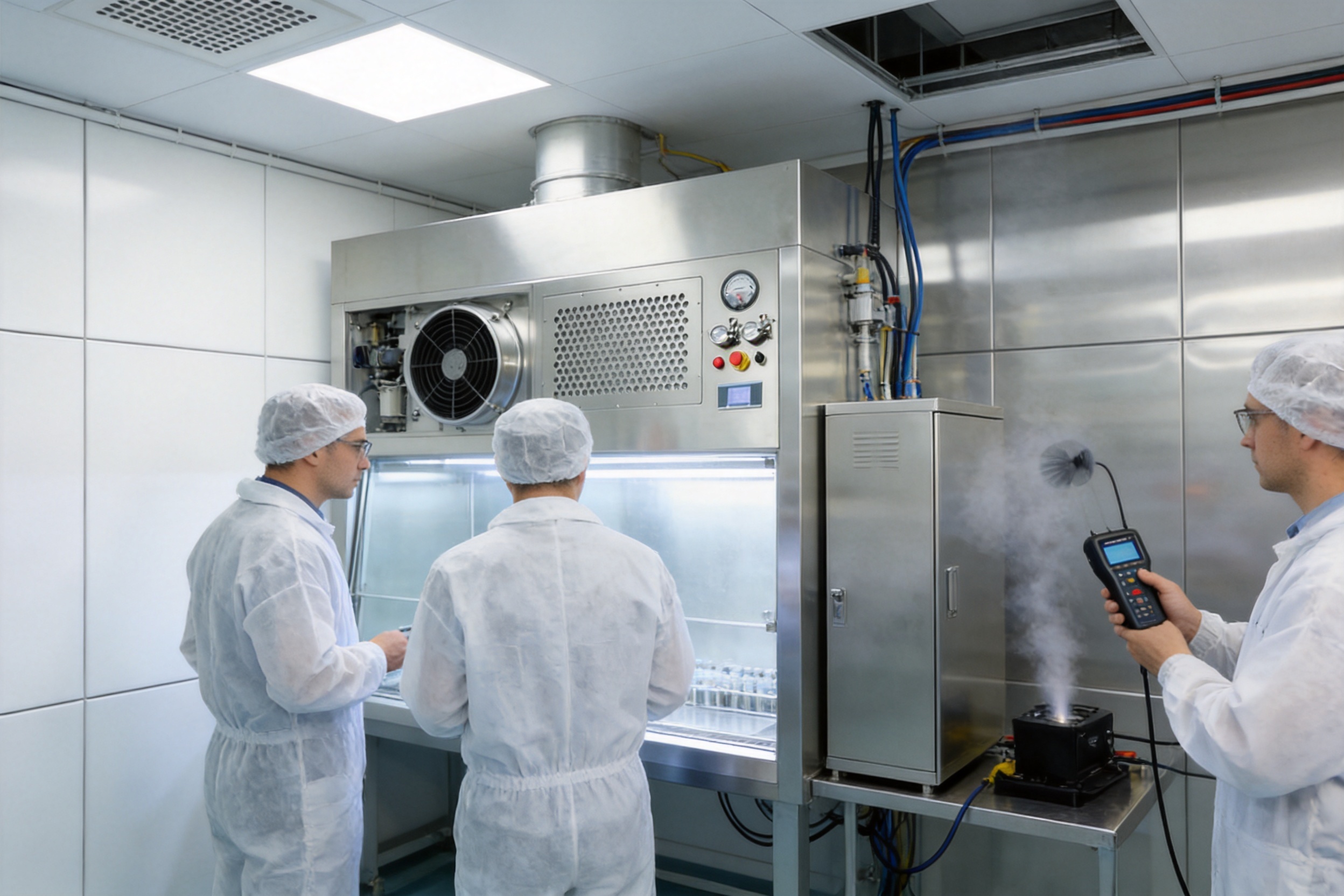
Applications
Pharmaceutical Manufacturing
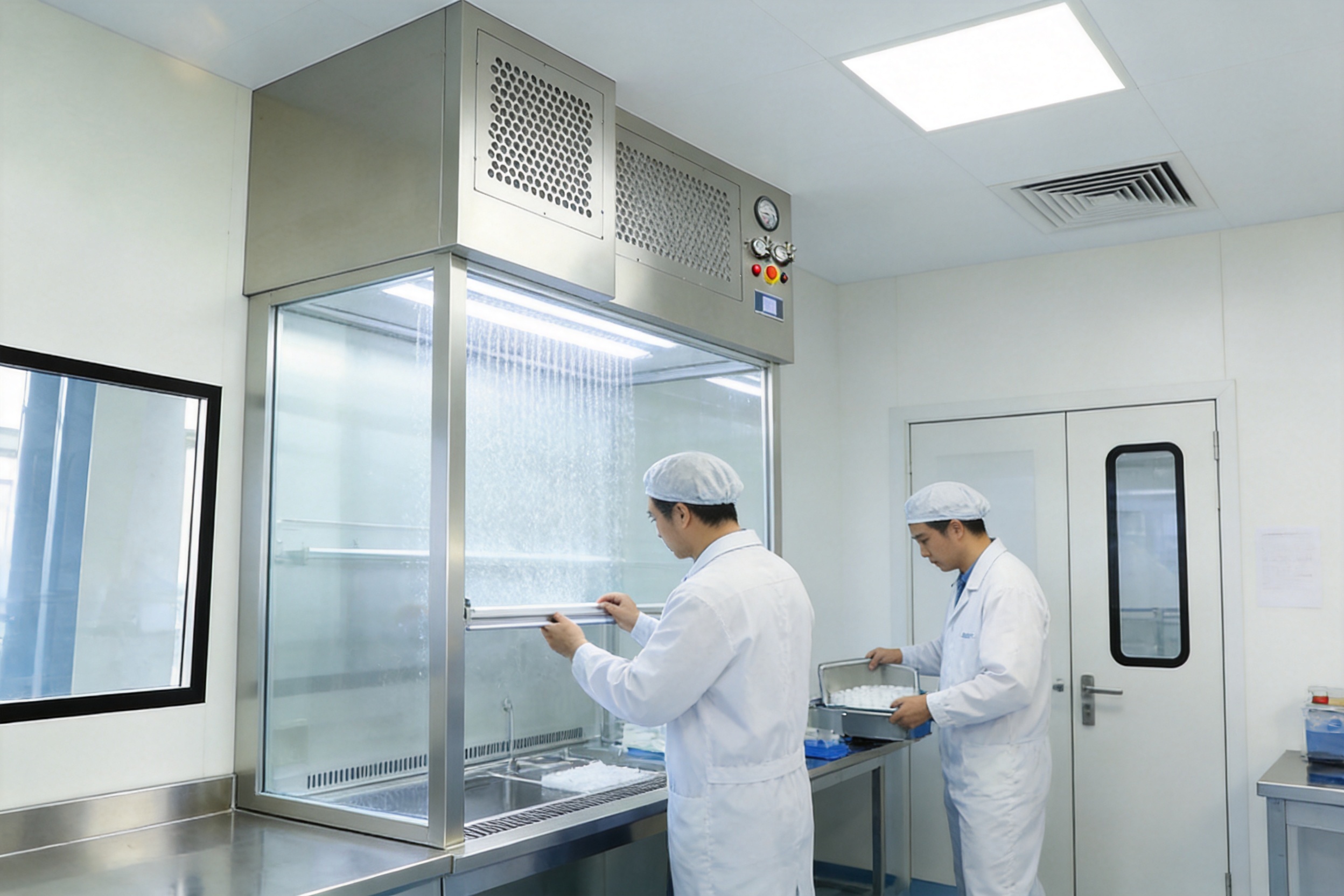
Pharmaceutical production often includes weighing, sampling, preparation, filling, inspection, and laboratory testing steps where exposed materials require protection from airborne particles. A laminar air flow unit can be used for selected operations when a localized clean zone is suitable for the process risk assessment.
The unit may support component preparation, sterile material handling, small-batch work, laboratory procedures, or other controlled activities. The final configuration should be evaluated against the product, process, personnel, and environmental protection requirements of the application.
Laboratories
Research and quality-control laboratories may use laminar air flow equipment for sample preparation, assembly of sensitive test materials, microscopy-related activities, and other procedures where particle control is important. Customized dimensions can help the unit accommodate analytical instruments or special work surfaces.
Laboratories often value ease of cleaning, low maintenance burden, accessible controls, and the ability to specify suitable lighting and electrical outlets. Stainless steel construction can support routine disinfection and a professional hygienic environment.
Hospitals and Healthcare Facilities
Healthcare facilities may require localized clean air for specific preparation or handling tasks. The exact application must be reviewed carefully because not every medical or biological procedure is suitable for a standard laminar air flow unit.
Where product protection is the principal objective and no hazardous aerosol or biological containment requirement exists, the equipment may provide a useful controlled workspace. Healthcare customers should confirm the applicable local regulations and infection-control procedures before selection.
Food Processing
Food-processing operations may use localized filtered airflow during exposed product handling, sampling, packaging preparation, or specialized quality-control procedures. SS304 surfaces are often appropriate for hygienic environments, provided that the cleaning chemicals and operating conditions are compatible with the selected materials.
Food applications may also require careful consideration of condensation, temperature, moisture, cleaning frequency, and access for sanitation. The equipment should be incorporated into the site’s broader hygienic zoning and maintenance plan.
Electronics and Precision Manufacturing
Electronic components, optical parts, precision assemblies, and other sensitive products can be affected by airborne particles. A laminar air flow workstation can provide a cleaner local environment for assembly, inspection, repair, or packaging operations.
For electronics applications, the project may also need to address electrostatic discharge protection, grounding, work-surface material, lighting, and operator procedures. These requirements should be added to the equipment specification rather than assumed to be included in every standard unit.
Installation and Commissioning
Correct installation is as important as factory construction. Before delivery, the customer should confirm the installation location, access route, lifting method, utility connections, floor loading, ceiling height, and maintenance clearances.
After positioning, the unit should be checked for level, stability, alignment, and connection integrity. Filter installation should be performed carefully to avoid damage to the filter media or gasket. Electrical and control connections should be completed by qualified personnel according to the approved diagrams.
Commissioning normally includes functional checks, airflow measurements, visual inspection of the air pattern, instrument verification, and cleaning. Depending on the project, additional testing may be required to demonstrate filter integrity, particle performance, noise level, or compliance with a cleanroom classification.
Operators should receive training on startup, shutdown, loading, cleaning, alarm response, filter replacement, and routine inspection. A laminar air flow unit cannot compensate for poor operating practices. Personnel should avoid blocking the airflow, moving objects rapidly through the clean zone, or introducing unnecessary packaging and materials.
Maintenance and Lifecycle Performance
Routine maintenance helps preserve airflow performance and extend equipment life. Cleaning schedules should be based on the application, operating frequency, contamination load, and site procedures. Internal surfaces should be cleaned using approved agents and methods that do not damage stainless steel, seals, filters, sensors, or electrical components.
Pre-filters, where installed, may require regular inspection and replacement. A blocked pre-filter can reduce airflow and increase fan load. The HEPA filter should be monitored through pressure drop, airflow performance, integrity testing, or another approved method. Filter replacement should be performed when performance falls outside the defined limits or when the filter reaches its service condition.
Fans and motors should be inspected for abnormal noise, vibration, temperature, and electrical behavior. Sensors and gauges should be checked for reliable readings. PLC systems and alarms should be functionally tested according to the maintenance plan.
Documentation supports lifecycle control. Important records may include equipment drawings, manuals, component lists, factory test reports, filter certificates, calibration records, installation reports, commissioning results, cleaning procedures, and maintenance logs.
Why Choose Pharma United for Laminar Air Flow Equipment?
Pharma United Co., Ltd. is a global provider of cleanroom solutions serving pharmaceutical, healthcare, and industrial applications. The company combines product manufacturing with cleanroom design, engineering, installation, and project coordination.
The company has more than twenty years of industry experience and operates a manufacturing facility with an area of approximately 20,000 square meters. Its reported annual output exceeds 1,000 40HQ containers, supported by more than sixty staff members. These resources indicate a manufacturing organization capable of handling both individual equipment orders and larger international cleanroom projects.
Pharma United’s development followed earlier company and manufacturing activities, including Shanghai Sinoarch Co., Ltd., established in 2006, CESE International Co., Ltd. in 2014, the Kunshan factory and Pharma United Co., Ltd. in 2016, and a branch factory in Qianjiang, Hubei, in 2022. In 2026, the Kunshan factory expanded to double its previous production capacity.
Manufacturing scale can provide practical advantages when supported by effective quality systems. Larger production capacity may improve scheduling flexibility, material organization, assembly resources, and the ability to standardize repeatable processes. At the same time, customized engineering remains important because cleanroom equipment is often designed for a specific facility and process.
The company has completed projects in Africa, the Middle East, South Asia, and other international markets. Experience across different regions can help the engineering team understand varied site conditions, shipping requirements, utility standards, installation practices, and customer expectations.
Pharma United also supports BIM visualization and full installation services. These capabilities can help customers review the proposed solution before fabrication, identify clashes with building systems, and coordinate installation activities more efficiently.
Recommended Specification Development Process
A clear specification process helps ensure that the final unit meets its intended purpose. The first step is to define the product or process requiring protection. This includes the materials handled, exposure time, sensitivity to particles, operator interaction, and any potential hazards.
The second step is to select the airflow direction and working configuration. Horizontal and vertical arrangements have different practical effects on operator access, product placement, and exhaust behavior. The decision should be based on the process rather than appearance or personal preference.
The third step is to define the working dimensions. The required width, depth, height, operator position, equipment footprint, and service clearances should be documented. Oversizing may increase cost and energy use, while undersizing may cause obstruction and poor operating practices.
The fourth step is to specify the filtration and airflow performance. This includes the HEPA filter arrangement, target airflow, uniformity, fan capacity, noise expectations, and testing requirements. Filter replacement and access should be included at this stage.
The fifth step is to define monitoring and controls. The customer should decide whether airflow sensors, differential-pressure gauges, alarms, PLC control, data logging, or building management integration are required.
The sixth step is to confirm materials and finishes. SS304 is listed as the main material for this product, but the final specification should also address surface finish, worktop construction, gaskets, sealants, lighting, electrical components, and cleaning-agent compatibility.
The final step is to establish documentation, factory testing, installation, commissioning, training, and maintenance requirements. These elements provide the basis for a complete and verifiable delivery.
Q&A
What is the main purpose of a laminar air flow unit?
Its main purpose is to create a localized clean working area using HEPA-filtered, unidirectional airflow. The clean air stream helps protect exposed products, materials, components, or processes from airborne particle contamination.
Does the unit protect the operator from hazardous materials?
Not necessarily. A standard laminar air flow unit is primarily intended for product or process protection. If the application involves biological agents, toxic chemicals, hazardous powders, or infectious materials, a suitable containment cabinet or specialized exhaust system may be required. A risk assessment should be completed before equipment selection.
Can the equipment be manufactured in different sizes?
Yes. The listed size is customized. Dimensions can be developed according to the working area, room layout, operator requirements, equipment arrangement, access route, and maintenance needs.
Why is SS304 used?
SS304 provides good corrosion resistance, a smooth cleanable surface, and suitable durability for many pharmaceutical, laboratory, healthcare, food, and industrial applications. The cleaning chemicals and environmental conditions should still be reviewed to confirm material compatibility.
Is the filter always included as a fixed standard component?
The product information lists the filter as project-dependent. This means the filter arrangement should be selected according to the required airflow, dimensions, pressure drop, application, and applicable project standards.
What is the purpose of an airflow sensor?
An airflow sensor can monitor whether the unit is operating within the specified airflow range. It may support operator checks, alarms, maintenance decisions, and commissioning documentation, depending on the selected control system.
Why might a differential-pressure gauge be required?
A differential-pressure gauge can indicate pressure loss across a filter or defined section of the air system. A rising pressure difference may indicate filter loading or another airflow restriction. The gauge should be interpreted together with airflow measurements and the site maintenance procedure.
Can the unit be integrated into a complete cleanroom?
Yes. It can be coordinated with cleanroom panels, doors, windows, HVAC systems, modular cleanrooms, electrical services, and other equipment. Integration should be reviewed during the design stage to confirm dimensions, supports, utilities, airflow relationships, and maintenance access.
What industries can use this equipment?
Typical applications include pharmaceutical manufacturing, laboratories, hospitals, food processing, electronics, precision assembly, and other industries where a localized clean working area is required. The final suitability depends on the process risk assessment and applicable regulations.
What testing should be completed before use?
Testing may include dimensional and visual inspection, airflow velocity and uniformity measurements, filter integrity testing, particle measurement, smoke visualization, electrical checks, alarm testing, and instrument calibration. The final test plan should be agreed according to the application and project standards.
How does customized equipment compare with a standard catalog unit?
A customized unit can better match the room, process, work surface, monitoring requirements, airflow direction, and maintenance approach. A catalog unit may be suitable for simple applications, but customized engineering is often more effective when the equipment must integrate with a larger cleanroom or meet specific technical requirements.
What information should a customer provide when requesting a quotation?
The customer should provide the intended application, required working dimensions, airflow direction, room drawings, installation location, electrical supply, cleanroom classification, desired filter and monitoring requirements, material preferences, cleaning method, documentation needs, and delivery or installation expectations.
Conclusion
Laminar Air Flow equipment provides a practical way to establish a localized clean working area without applying the same airflow arrangement to an entire room. By passing air through a HEPA filter and directing it uniformly across the work zone, the equipment helps reduce exposure to airborne particles during critical operations.
The Pharma United solution is distinguished by customized sizing, SS304 construction, configurable filtration and airflow components, and the ability to integrate with broader cleanroom projects. These features can provide advantages over basic standardized units when the application requires careful coordination, hygienic construction, monitoring, and long-term serviceability.
The company’s manufacturing capability, engineering experience, international project background, BIM coordination, factory resources, and installation support provide a foundation for delivering more than a standalone cabinet. The equipment can be developed as part of an integrated cleanroom engineering solution that addresses the relationship between the work zone, room environment, utilities, personnel, materials, and maintenance.
For the best result, customers should define the process requirements before finalizing the unit. Airflow direction, working dimensions, filtration, fan capacity, monitoring, controls, material compatibility, testing, installation, and operator procedures should all be addressed in the technical specification.
When properly selected, manufactured, installed, commissioned, and maintained, a laminar air flow unit can contribute to reliable contamination control in pharmaceutical, healthcare, laboratory, food, electronics, and other precision environments.
References
1. Institute of Environmental Sciences and Technology, Recommended Practices for Testing Clean Air and Controlled Environments.
2. International Organization for Standardization, ISO 14644 Series, Cleanrooms and Associated Controlled Environments.
3. United States Pharmacopeia, General Chapter on Sterility and Cleanroom-Related Environmental Control.
4. European Commission, Good Manufacturing Practice Guidelines for Medicinal Products.
5. World Health Organization, Good Manufacturing Practices for Pharmaceutical Products.
6. ASHRAE Handbook, HVAC Applications and Air-Cleaning Technology.
7. National Sanitation Foundation, Hygienic Design Principles for Food and Pharmaceutical Equipment.
8. Pharma United Co., Ltd., Product and Company Information for Cleanroom Engineering Solutions.
Product: Laminar Air Flow



-
Mobile
+86-177 1554 8238
-
E-mail
chin@pharma-united.com
-
Address
No.58 Beiyuan Road, Dianshanhu Town, Kunshan City, Jiangsu Province, China
Copyright © Pharma United Co., Ltd. Rights Reserved.
OEM/ODM Cleanroom Engineering Solution Manufacturers
