

 English
 русский
 Français
 Español
 عربى

Weighing Booths for Safe, Controlled Powder Handling in Cleanroom Operations
Introduction
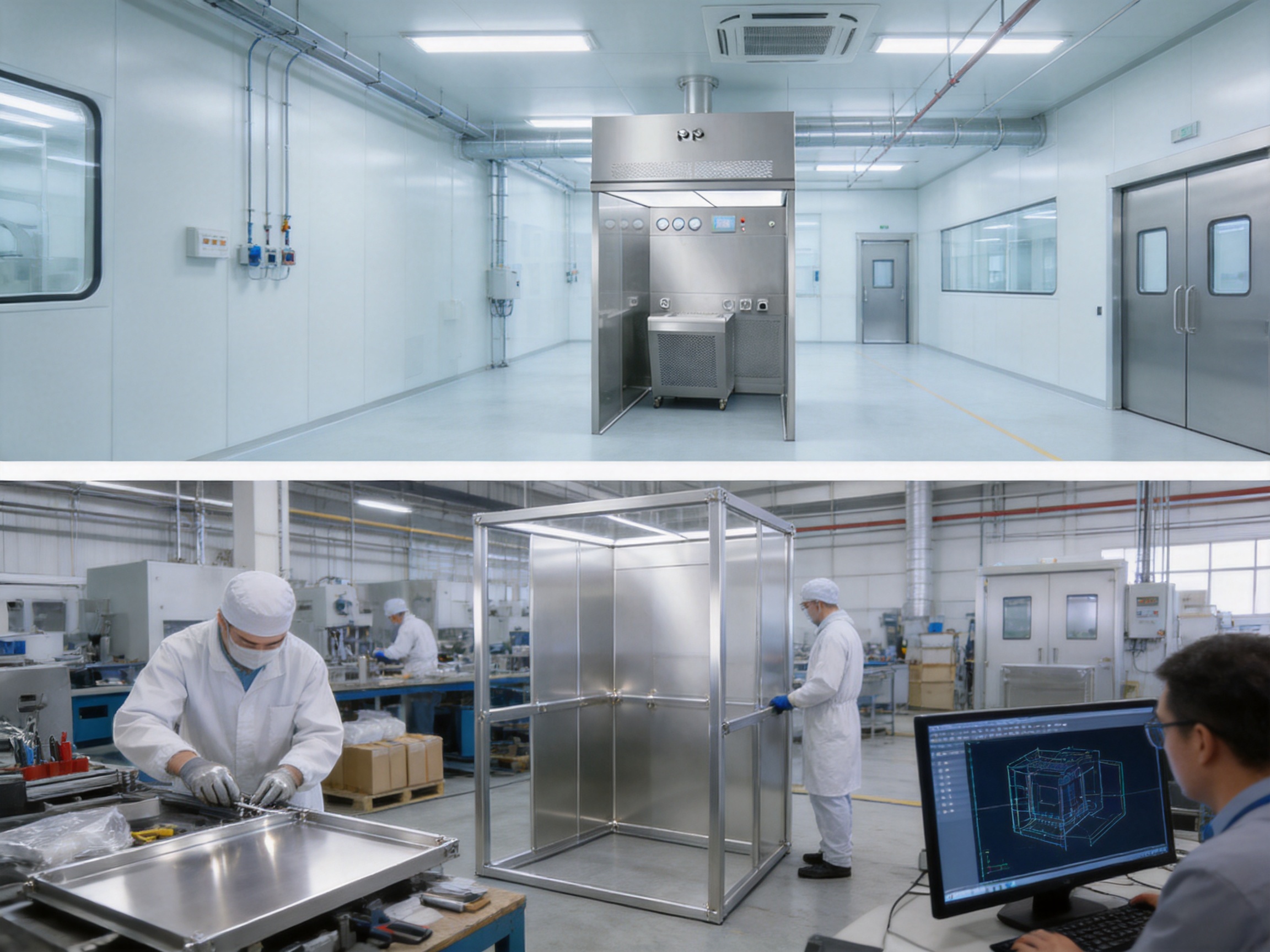
Powder handling is one of the most demanding activities in pharmaceutical, healthcare, chemical, food processing, and research environments. During weighing, sampling, dispensing, and material transfer, powders can become airborne and spread beyond the immediate work area. Even a small amount of uncontrolled dust may create cross-contamination risks, affect product quality, expose operators to potentially harmful substances, and increase the burden on the facility’s general heating, ventilation, and air-conditioning system.
A weighing booth provides a practical engineering solution to this challenge. It creates a localized, controlled working zone in which powder-handling operations can be performed under directed airflow and negative pressure conditions. Instead of depending only on the overall cleanroom environment, the weighing booth adds a dedicated layer of protection at the point where dust is generated.
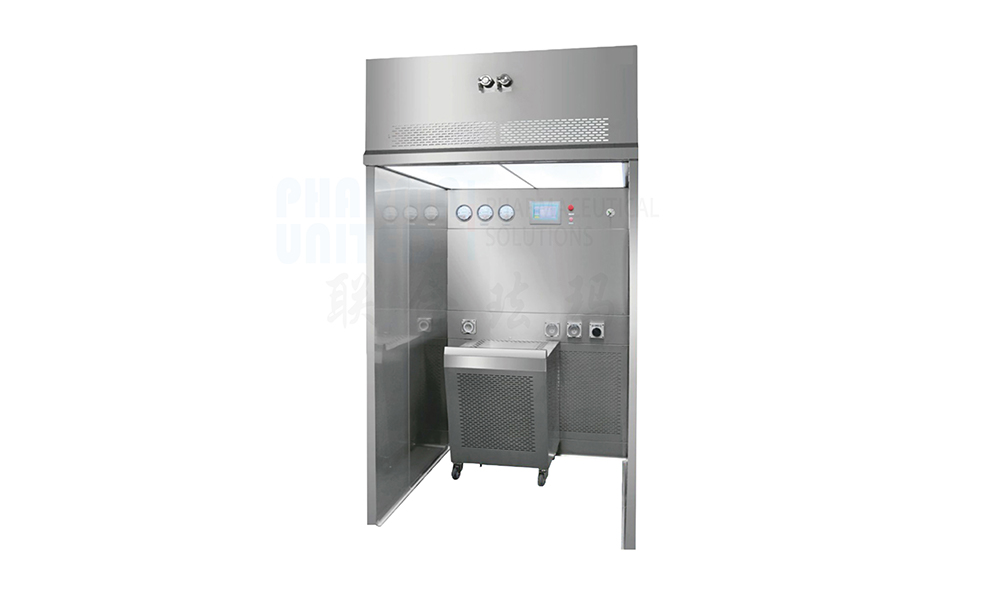
The weighing booth supplied by Pharma United Co., Ltd. is designed for powder weighing, sampling, dispensing, and material transfer. Its structure can be customized according to the available room, process requirements, equipment layout, material characteristics, and applicable cleanroom standards. The primary construction material is SS304 stainless steel, providing a durable and hygienic surface suitable for demanding industrial and pharmaceutical applications.
Unlike a simple enclosure or conventional workbench, a properly engineered weighing booth combines airflow management, pressure control, cleanable construction, operator ergonomics, and process integration. Its purpose is not merely to surround a weighing scale. It is to establish a reliable local containment and cleanliness strategy that supports safe operations and helps organizations achieve consistent manufacturing performance.
Weighing Booth
What Is a Weighing Booth?
A weighing booth is a localized clean air and containment system used for handling powders and other particulate materials. It normally consists of a stainless-steel work chamber, a working surface, airflow pathways, access openings, lighting, control components, and filtration or exhaust provisions selected for the intended application.
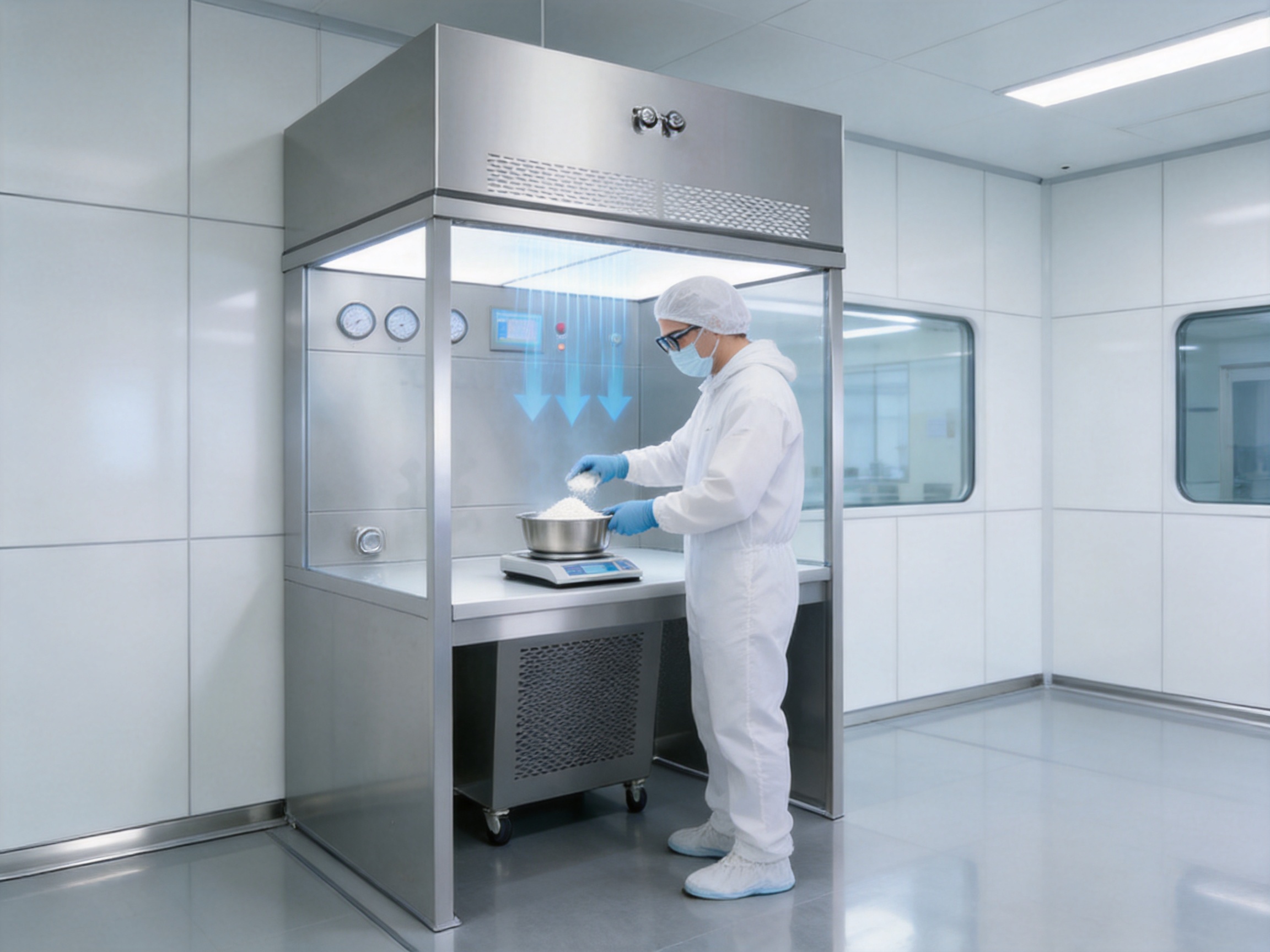
The booth is engineered to guide air in a controlled direction around the operator and the process. In the supplied design concept, downward airflow and a negative-pressure working zone help draw dust away from the operator’s breathing area and prevent uncontrolled migration into adjacent spaces. The airflow pattern also helps protect the surrounding environment from particles generated during weighing or dispensing.
Depending on the application, a weighing booth may be installed inside a cleanroom, dispensing room, material preparation room, laboratory, or production area. It can be used as an independent workstation or integrated into a broader cleanroom system that includes cleanroom panels, doors, windows, HVAC equipment, airlocks, pass boxes, and material flow controls.
The booth is especially useful where the process requires frequent handling of powders in open containers. Typical activities include opening raw-material bags, transferring powders into smaller containers, collecting samples, weighing active ingredients, dividing batches, and preparing materials for the next production stage.
Primary Functions
The first function is operator protection. By controlling the direction of airflow and maintaining a suitable pressure relationship, the booth helps reduce the quantity of airborne dust that can move toward the operator.
The second function is product protection. A controlled work zone helps reduce the possibility that airborne particles from the surrounding room will enter an open material container or contaminate a batch during processing.
The third function is environmental protection. Dust generated during dispensing should not be allowed to spread freely into adjacent work areas. Localized containment reduces the possibility of contaminating rooms, corridors, equipment, and nearby materials.
The fourth function is process consistency. A dedicated workstation creates a repeatable location for weighing and sampling. This supports standardized operating procedures, easier cleaning, improved workflow organization, and more reliable material control.
Working Principle of a Downflow Negative-Pressure Booth
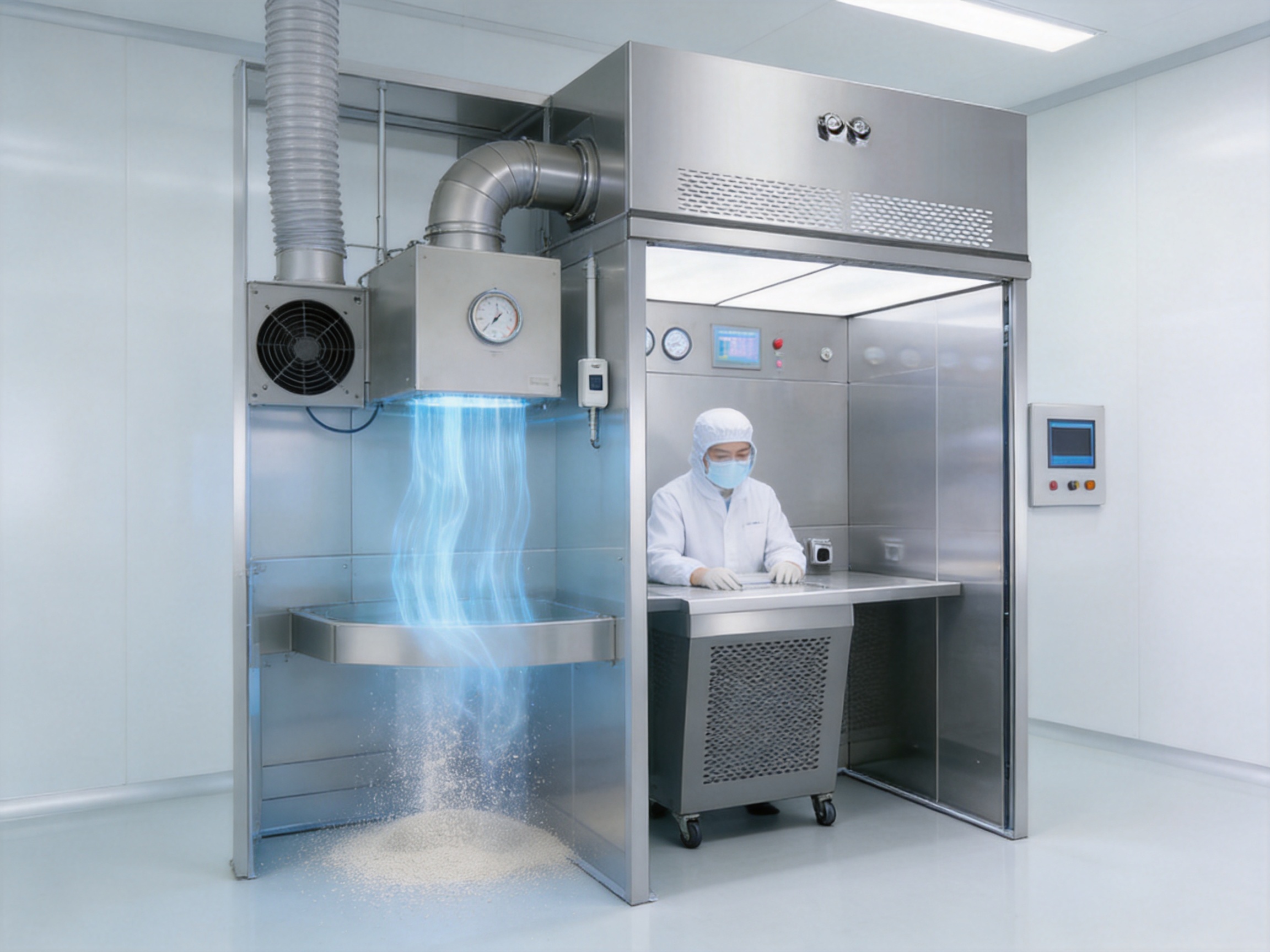
The operating principle is based on the relationship between airflow direction, air velocity, pressure difference, and filtration or exhaust. Air enters the work area in a controlled manner and moves downward toward the lower part of the booth. Dust released during handling is carried away from the operator’s face and hands rather than being allowed to rise freely.
A negative-pressure condition means that the pressure inside the working zone is lower than the pressure in the surrounding room. When the booth is opened through an access area, air tends to move inward rather than outward. This inward movement helps limit the escape of contaminated air and supports the containment objective.
The exact pressure level and airflow performance must be determined according to the powder characteristics, process method, room classification, operator position, exhaust arrangement, and risk assessment. A booth used for a low-risk excipient may have different requirements from a booth used for a potent active pharmaceutical ingredient or a chemically hazardous powder.
Airflow should not be considered in isolation. Excessive air velocity may disturb powders, affect scale stability, increase turbulence, or create an uncomfortable working environment. Insufficient airflow may fail to capture dust effectively. The design therefore requires a balance between containment efficiency, weighing accuracy, operator comfort, energy consumption, and cleanability.
For this reason, each project should be evaluated as an engineered system rather than selected solely by nominal booth dimensions. The correct configuration may include a specific filter arrangement, exhaust connection, fan capacity, control panel, differential-pressure indication, airflow sensor, or programmable logic controller.
Airflow and Pressure Control
The weighing booth product information identifies the main material as SS304 and lists the filter, fan, airflow sensor, differential-pressure gauge, and PLC as application-dependent items. These components are shown as “-” in the standard product information because the final selection depends on project requirements rather than being fixed for every installation.
This customizable approach is valuable because powder-handling processes vary significantly. One customer may require a recirculating system with high-efficiency filtration. Another may require exhaust to a central HVAC system. A third may require a dedicated extraction arrangement based on hazardous material classification.
Airflow sensors can be included where continuous monitoring is required. A differential-pressure gauge can provide a simple visual indication of filter loading or pressure conditions. A PLC may be used for more advanced control, alarm management, interlocking, data communication, and integration with the facility management system.
Where the application requires high containment, additional engineering may include pressure alarms, filter integrity testing provisions, standby fans, emergency stop functions, access interlocks, or containment verification. These elements should be specified during the design stage and validated after installation.
Applications in Pharmaceutical and Industrial Facilities
Pharmaceutical Manufacturing
Pharmaceutical production often involves active ingredients, excipients, intermediates, and finished-product components in powder form. These materials may be weighed in small quantities or prepared in large batches. A weighing booth can support dispensing rooms, formulation areas, sampling points, and material preparation zones.
In a pharmaceutical facility, the booth can be positioned between material storage and production areas. Personnel can bring approved materials into the dispensing room, verify the identity and batch information, and perform weighing under controlled conditions. The enclosed workstation helps organize the process and can be incorporated into procedures for cleaning, line clearance, labeling, and material reconciliation.
The stainless-steel construction is particularly suitable for pharmaceutical applications because it provides a smooth, robust, and cleanable surface. Properly fabricated corners, joints, shelves, and work surfaces can reduce locations where powder may accumulate. The final design should be coordinated with the customer’s cleaning agents, sanitation procedures, and material compatibility requirements.
Laboratories and Research Facilities
Laboratories may need to weigh powders for analytical testing, formulation trials, development work, or quality-control testing. The volume of material may be relatively small, but the need for accuracy and contamination control can be high.
A customized weighing booth allows the laboratory to place the balance, sample containers, tools, and recording equipment in an organized work area. The booth can be designed around the required balance size and the operator’s preferred working position. Proper lighting and an ergonomic working height can reduce errors during repeated operations.
Chemical Processing
Chemical plants may use powders that are irritating, reactive, combustible, or otherwise hazardous. A weighing booth can form part of a broader risk-control strategy by helping contain dust at the point of use.
However, a standard weighing booth should not automatically be assumed to be suitable for every hazardous chemical. The process hazard assessment must determine whether special electrical protection, explosion-risk controls, corrosion-resistant materials, dedicated exhaust, grounding, or other safety measures are required. Pharma United can use the project information to develop a configuration appropriate to the application, while the customer remains responsible for providing accurate material and hazard data.
Food and Nutritional Product Manufacturing
Food, beverage, supplement, and nutritional-product manufacturers also handle powders during batching and formulation. Ingredients such as flour, starch, proteins, vitamins, minerals, flavoring powders, and functional additives can create dust during transfer.
A localized workstation helps improve housekeeping and reduces the movement of airborne ingredient particles. It can also support better segregation between ingredients and production stages. Stainless-steel surfaces are appropriate for facilities where hygiene, washdown compatibility, and visual cleanliness are important considerations.
Medical and Healthcare Product Production
Manufacturers of medical products, diagnostic materials, and healthcare consumables may require controlled workstations for powder preparation or component treatment. In these settings, the weighing booth may be integrated with cleanroom partitions, controlled personnel access, and specific environmental monitoring procedures.
Advantages Compared with Basic Enclosures and Conventional Workbenches
A conventional workbench offers a surface on which an operator can work, but it usually provides little control over dust movement. A basic enclosure may physically surround the process, yet it may not provide a properly designed airflow pattern, pressure relationship, or service arrangement. A weighing booth is more effective because it is developed as a process-control system.
Localized Containment
The most important advantage is that containment is concentrated around the source of dust generation. The facility does not have to rely only on general room ventilation to control particles released during weighing. This can improve the effectiveness of the overall cleanroom strategy and may reduce the spread of contamination.
Improved Operator Protection
Downward airflow and negative pressure help reduce the movement of powder toward the operator. Although the booth does not replace personal protective equipment, safe operating procedures, or industrial hygiene controls, it provides an important engineering control between the operator and the material.
Better Product Protection
The booth separates the weighing activity from the surrounding room to help reduce the entry of unwanted particles. This is particularly important when multiple products, ingredients, or batches are processed in the same facility.
Hygienic Stainless-Steel Construction
SS304 stainless steel offers a strong combination of mechanical durability, corrosion resistance, cleanability, and professional appearance. It is widely used in cleanroom and hygienic production environments. Smooth surfaces and carefully planned fabrication can simplify cleaning and reduce powder retention.
Customized Dimensions
The product size is identified as customized. This is a significant advantage over standard booths that may not fit the room, process equipment, or material flow. A customized booth can be adapted to the required balance, container dimensions, operator position, ceiling height, access route, and connection to existing HVAC or exhaust systems.
Integration with Existing Facilities
The booth can be designed to work with other cleanroom products and systems. It may be coordinated with wall panels, ceiling systems, doors, windows, airlocks, pass-through chambers, HVAC units, and monitoring instruments. This reduces the risk of treating the booth as an isolated item that does not match the rest of the facility.
Flexible Instrumentation
Because filters, fans, airflow sensors, differential-pressure gauges, and PLC controls are not fixed in the base product information, the system can be specified according to actual needs. This avoids unnecessary components in simple applications while allowing advanced control and monitoring in more demanding facilities.
Reduced Cross-Contamination Risk
Cross-contamination control is essential when different powders are handled in the same building. A dedicated booth, combined with validated cleaning procedures and proper material segregation, helps reduce the possibility of particles traveling from one operation to another.
Manufacturing Process and Engineering Strengths
The performance of a weighing booth depends not only on the design concept but also on the quality of manufacturing, assembly, inspection, and installation. Pharma United Co., Ltd. supports cleanroom projects through its own manufacturing capabilities and engineering resources.
Engineering-Led Project Development
The process begins with understanding the customer’s application. Important information includes the type of powder, batch quantity, weighing method, container size, operator count, room dimensions, required pressure relationship, exhaust route, cleanroom classification, cleaning method, electrical supply, and applicable regulations.
Based on this information, the engineering team can prepare a suitable booth layout and coordinate the unit with the surrounding facility. The objective is to make sure that the booth supports actual workflow rather than simply occupying available space.
Pharma United reports that its engineering team has more than ten years of average on-site experience. This practical background is valuable because cleanroom performance depends on construction details, service coordination, installation quality, and commissioning—not only on drawings and specifications.
Material Selection and Stainless-Steel Fabrication
SS304 is used as the main material for the weighing booth. Material selection must consider the cleaning chemicals, humidity, temperature, process substances, and expected service life. Stainless steel is processed into the booth body, work surfaces, panels, support structures, and other components according to the project design.
Manufacturing quality is influenced by sheet preparation, cutting accuracy, bending, welding, grinding, polishing, surface protection, and final assembly. Consistent fabrication helps create a booth with a professional appearance and fewer locations where dust can collect.
Critical interfaces should be checked carefully. These include corners, worktop edges, access openings, filter housings, service penetrations, drain or exhaust connections, lighting recesses, and removable panels. Poorly finished interfaces can make cleaning more difficult and may affect the long-term reliability of the equipment.
Modular Production Capability
Pharma United manufactures a broad range of cleanroom products, including metallic sandwich panels, HPL panels, cleanroom doors and windows, HVAC systems, and cleanroom equipment. This product range allows related components to be coordinated during a project.
A modular production approach can support repeatable manufacturing and easier project planning. Components can be prepared in the factory, inspected before shipment, and assembled at the customer’s site with less dependence on uncontrolled field fabrication.
For international projects, factory production also helps improve packing efficiency and shipment organization. The company reports an annual output of more than 1,000 40HQ containers, indicating substantial experience with large-scale production and export logistics.
Factory Capacity and Quality Consistency
Pharma United operates a factory area of approximately 20,000 square meters and has more than 60 staff members. A dedicated manufacturing facility provides space for material storage, fabrication, assembly, inspection, packing, and project coordination.
Factory-based production can offer better consistency than building every component directly at the project site. It allows the manufacturer to use defined processes, controlled tools, experienced workers, and inspection points. It also gives the project team greater visibility before equipment is dispatched.
The company’s reported industry experience exceeds 20 years. Its development includes the establishment and expansion of related manufacturing and engineering operations in China, including the Kunshan factory and a branch factory in Qianjiang, Hubei. In 2026, the Kunshan factory expanded to double its previous production capacity.
BIM and Installation Support
Cleanroom equipment must fit accurately within the building and coordinate with other services. Building Information Modeling can help visualize the relationship between the booth, walls, ceiling, HVAC ducts, electrical services, material routes, and operator access.
BIM visualization is especially useful when several pieces of equipment are installed in a confined room. It helps identify clashes before construction begins and supports more accurate coordination between architectural, mechanical, electrical, and process disciplines.
Pharma United provides full installation services for suitable projects. On-site installation may include positioning, leveling, connection of services, sealing of interfaces, control wiring, adjustment of airflow components, and support for commissioning activities.
Customization Options
Customization is central to the design of the weighing booth. The correct configuration should be based on the process rather than on a fixed catalog size.
Dimensions and Layout
The width, depth, and height can be planned according to the room and the equipment inside the booth. The layout should provide enough space for the balance, containers, tools, labels, and operator movement without creating unnecessary dead zones.
Access openings should be positioned to support comfortable working posture. If materials enter from one side and finished containers leave from another, the booth layout can be coordinated with the material flow. In larger facilities, the booth may be connected to pass boxes or arranged near airlocks to support segregation.
Work Surface
The work surface must be suitable for the weighing equipment and process. It should be stable enough to support accurate measurement and should be designed to avoid unnecessary vibration. The surface material and finish should also be compatible with the cleaning program.
Where a precision balance is used, the customer should evaluate vibration from nearby equipment, airflow impact, floor movement, and operator contact. The booth design can provide an appropriate support arrangement, but final balance performance must be confirmed under actual operating conditions.
Filtration and Exhaust
Filters may be selected according to the particle characteristics, cleanliness requirements, recirculation strategy, and exhaust arrangement. The choice may include pre-filtration, high-efficiency filtration, or another configuration approved by the project design team.
The exhaust system must be evaluated for capacity, pressure loss, discharge location, maintenance access, and compatibility with the building’s HVAC system. If the booth uses a dedicated fan, the fan type and control method should match the airflow requirement and risk assessment.
Monitoring and Controls
An airflow sensor can be used to monitor whether the system is operating within the defined range. A differential-pressure gauge can help operators observe filter condition or pressure relationships. For projects requiring automated control, a PLC can coordinate the fan, lighting, alarms, interlocks, and operating status.
The control system may also be connected to a supervisory system or building management system when required. Alarm limits, data recording, remote monitoring, and access permissions should be agreed during the specification stage.
Lighting and Utilities
Suitable lighting is important for reading labels, checking containers, observing powder condition, and completing documentation. Lighting fixtures should be selected and installed so that they are easy to clean and do not create unnecessary ledges.
Electrical sockets, grounding points, compressed air, vacuum, network connections, and other utilities can be planned according to the process. Each service penetration should be sealed appropriately to preserve the cleanable character of the booth and minimize dust accumulation.
Quality, Cleaning, and Maintenance Considerations
A weighing booth performs best when design, operation, cleaning, and maintenance are treated as a single lifecycle program. The booth should be easy to inspect and clean after every batch or material change, according to the approved standard operating procedure.
Cleaning methods depend on the material being handled. Dry cleaning may be suitable for some powders, while wet cleaning may be required for others. The customer should confirm whether the selected cleaning agents are compatible with SS304, gaskets, sealants, filters, electrical parts, and other surfaces.
Operators should pay attention to corners, undersides, worktop edges, equipment supports, filter frames, access panels, and areas around weighing equipment. A good design reduces hidden spaces and makes these areas accessible for inspection.
Filters and other consumable components require planned maintenance. The replacement interval should not be based only on calendar time. It may depend on pressure drop, operating hours, powder load, filter type, and the manufacturer’s recommendations.
Where monitoring instruments are installed, they should be checked and calibrated according to the site’s quality system. Airflow sensors, pressure gauges, alarms, and control components should be included in the maintenance schedule.
Commissioning and Verification
After installation, the booth should be commissioned to confirm that it operates according to the approved design. Typical checks may include visual inspection, dimensional verification, airflow measurement, pressure testing, alarm checks, lighting checks, filter installation inspection, and control-function testing.
Depending on the facility and application, further testing may include smoke visualization, particle measurement, filter integrity testing, recovery testing, noise measurement, or containment performance assessment. The specific test plan should be agreed by the customer, engineering team, and quality department.
Commissioning documentation should identify the equipment configuration, test instruments, acceptance criteria, results, deviations, and corrective actions. This creates a useful baseline for future maintenance and performance reviews.
Project Workflow from Concept to Installation
A successful weighing booth project usually follows a structured workflow.
Step One: Application Review
The project team gathers information about the material, process, hazards, weighing equipment, operator method, cleaning procedure, room conditions, and production schedule. Accurate information at this stage prevents unsuitable assumptions later.
Step Two: Preliminary Design
The booth dimensions, airflow concept, access points, services, monitoring instruments, and relationship with the surrounding cleanroom are developed. Drawings and specifications are reviewed with the customer.
Step Three: Technical Confirmation
The project team confirms the main material, surface finish, filtration approach, fan arrangement, control requirements, electrical supply, exhaust connection, and installation conditions. Any special requirements for hazardous powders or regulated production must be documented.
Step Four: Factory Manufacturing
After approval, stainless-steel parts and other components are manufactured in the factory. Fabrication, welding, finishing, assembly, and inspection are carried out according to the agreed design.
Step Five: Packing and Delivery
The booth and accessories are packed for international transport. Packaging must protect finished surfaces, instruments, filters, control components, and delicate parts from impact, moisture, and contamination.
Step Six: Site Installation
The installation team positions the booth, connects services, completes sealing and assembly work, and coordinates with the local construction team. The installation sequence should protect the cleanroom environment and avoid unnecessary exposure of finished surfaces.
Step Seven: Testing and Handover
Testing confirms that the booth operates as intended. The handover package may include drawings, operating instructions, maintenance recommendations, component information, test results, and training records.
Comparison of Common Powder-Handling Workstations
| Feature | Open Workbench | Basic Enclosure | Customized Weighing Booth |
| Dust containment | Limited | Dependent on design | Designed around controlled airflow and pressure |
| Operator protection | Primarily dependent on room ventilation and PPE | Variable | Supported by localized airflow and negative pressure |
| Product protection | Limited | Variable | Improved through controlled working conditions |
| Dimensions | Usually standard | May be standard | Customized to the process and room |
| Material | Varies widely | Varies widely | SS304 main construction material |
| Instrumentation | Usually minimal | May be limited | Filter, fan, airflow sensor, DP gauge, and PLC options |
| Facility integration | Low | Moderate | Can be coordinated with cleanroom systems and HVAC |
| Process standardization | Low | Moderate | High when properly specified and validated |
Why Choose an Integrated Cleanroom Manufacturer?
Purchasing a weighing booth from an integrated cleanroom manufacturer can simplify project coordination. The booth may need to match wall panels, ceiling systems, doors, windows, HVAC systems, pass boxes, and other equipment. When these products are developed and supplied through one engineering organization, interface responsibilities can be clearer.
Pharma United provides cleanroom design, material manufacturing, equipment supply, and on-site installation. This integrated capability supports turnkey projects in pharmaceutical, healthcare, and industrial applications.
The company has completed projects in Africa, the Middle East, South Asia, and other international markets. Experience across different regions can help the project team understand variations in site conditions, logistics, local construction practices, and customer expectations.
Its manufacturing and engineering resources also support OEM and ODM requirements. Customers may require a standard concept with a modified size, a private-label configuration, or a fully engineered booth integrated into a larger production line. The design process can be adjusted to suit the project scope.
Another advantage is communication continuity. When design, manufacturing, shipment, installation, and commissioning are coordinated by the same supplier, technical questions can be addressed more directly. This can reduce the risk of mismatched dimensions, unclear responsibilities, and late-stage modifications.
Safety and Compliance Considerations
A weighing booth is an engineering control, not a substitute for a complete safety program. The customer must evaluate the material hazards, exposure limits, combustible dust risks, chemical compatibility, personal protective equipment, emergency procedures, and waste-handling requirements.
The final equipment specification should identify applicable local and international standards. Depending on the market and application, the project may require documentation related to electrical safety, cleanroom performance, filtration, pressure control, equipment materials, or quality management.
For pharmaceutical production, the booth may need to support good manufacturing practice procedures, cleaning validation, environmental monitoring, material traceability, and change control. The equipment design should be reviewed by the customer’s quality and validation departments before purchase.
For combustible powders, a separate assessment is essential. Standard fans, switches, motors, and electrical components may not be appropriate for an explosive atmosphere. Special designs and approvals may be required. Customers should provide complete hazard information before the equipment is engineered.
Frequently Asked Questions
What operations can be performed in a weighing booth?
A weighing booth is commonly used for powder weighing, sampling, dispensing, material transfer, batching, and preparation of ingredients or active materials. The exact operation depends on the booth configuration and the customer’s approved procedures.
Is the weighing booth suitable for pharmaceutical factories?
Yes. Its localized controlled work zone, negative-pressure concept, SS304 construction, and customizable dimensions make it suitable for many pharmaceutical applications. The final design must be reviewed against the specific product, process, cleanroom classification, and validation requirements.
Why is SS304 used as the main material?
SS304 offers durability, cleanability, corrosion resistance, and a smooth hygienic surface. It is widely used in cleanroom, pharmaceutical, food, laboratory, and industrial environments. A different material or grade may be considered if the process involves special corrosion or chemical compatibility requirements.
Is the booth supplied with a filter and fan?
The filter and fan are application-dependent. The product information lists these items as configurable rather than fixed. Their selection should be based on airflow requirements, pressure loss, powder properties, exhaust design, filtration strategy, and applicable safety requirements.
Can the booth size be customized?
Yes. The size is customized according to the room, weighing equipment, operator position, container dimensions, material flow, and service connections. This allows the booth to fit both small laboratory operations and larger industrial dispensing processes.
Can a differential-pressure gauge be included?
Yes. A differential-pressure gauge can be included where the project requires visual monitoring of pressure conditions or filter loading. The measurement range and connection arrangement should be selected according to the final system design.
Can the booth use a PLC control system?
Yes. A PLC can be included for fan control, operating status, alarms, interlocks, lighting, and communication with other systems. The control functions should be defined during the technical specification stage.
Does the booth replace personal protective equipment?
No. The booth is an engineering control that works together with personal protective equipment, safe operating procedures, training, cleaning, and risk assessment. The required PPE depends on the material and process.
Can the booth be connected to an existing HVAC system?
It may be connected to an existing HVAC or exhaust system if the capacity, pressure, filtration, discharge, and control requirements are compatible. A technical review is required before connection to confirm that the building system can support the booth.
How is the weighing booth cleaned?
Cleaning depends on the powder and the approved site procedure. The SS304 surfaces can generally be cleaned using suitable dry or wet methods, provided that the selected agents and procedures are compatible with the equipment. Operators should follow documented cleaning and line-clearance instructions.
Can the booth be used for hazardous powders?
It may be possible, but hazardous applications require a detailed assessment. The customer must provide information about toxicity, exposure limits, reactivity, combustible dust potential, and required containment level. Additional engineering or specially certified components may be necessary.
Does Pharma United provide installation services?
Pharma United provides on-site installation services for suitable projects. Installation may include equipment positioning, assembly, service connections, sealing, adjustment, and support for testing and handover.
What information is needed for a quotation?
Useful information includes the desired booth dimensions, room drawings, powder characteristics, process description, weighing scale size, required airflow concept, exhaust arrangement, cleanroom classification, electrical supply, monitoring requirements, installation location, and delivery destination.
Conclusion
A weighing booth is an important piece of cleanroom equipment for facilities that handle powders during weighing, sampling, dispensing, and material transfer. By creating a localized downflow and negative-pressure work zone, it helps improve operator protection, product protection, environmental control, and process consistency.
The Pharma United configuration offers several practical strengths: customized dimensions, SS304 construction, flexible filtration and fan arrangements, optional airflow and pressure monitoring, PLC control possibilities, and compatibility with wider cleanroom engineering projects. These features provide greater flexibility than a standard workbench or a basic enclosure.
The company’s manufacturing capabilities further support the equipment’s value. Its factory infrastructure, cleanroom product range, international project experience, BIM resources, installation services, and reported engineering experience allow the weighing booth to be developed as part of a complete facility rather than as an isolated product.
The best performance is achieved when the booth is correctly matched to the powder, workflow, room, HVAC system, cleaning method, and regulatory expectations. With accurate application information and careful commissioning, a customized weighing booth can become a reliable foundation for safer and more controlled powder-handling operations.
References
1. United States Pharmacopeia, general guidance on pharmaceutical environments, contamination control, and equipment suitability.
2. European Commission, EudraLex Volume 4, Guidelines for Good Manufacturing Practice for Medicinal Products.
3. International Organization for Standardization, ISO 14644 series, Cleanrooms and Associated Controlled Environments.
4. International Organization for Standardization, ISO 14644-3, Test Methods for Cleanrooms.
5. International Organization for Standardization, ISO 14644-4, Design, Construction, and Start-Up of Cleanrooms.
6. International Organization for Standardization, ISO 14644-5, Operations of Cleanrooms.
7. International Society for Pharmaceutical Engineering, Baseline Guide for Sterile Product Manufacturing Facilities.
8. Good Manufacturing Practice guidance for pharmaceutical dispensing, material handling, cleaning, and contamination control.
9. Industrial hygiene principles for local exhaust ventilation and control of airborne particulate exposure.
10. Pharma United Co., Ltd., product information and corporate manufacturing profile supplied for this article.
Product: Weighing Booth



-
Mobile
+86-177 1554 8238
-
E-mail
chin@pharma-united.com
-
Address
No.58 Beiyuan Road, Dianshanhu Town, Kunshan City, Jiangsu Province, China
Copyright © Pharma United Co., Ltd. Rights Reserved.
OEM/ODM Cleanroom Engineering Solution Manufacturers
