

 English
 русский
 Français
 Español
 عربى

Air Shower Systems for Reliable Cleanroom Entry and Contamination Control
Air Shower Systems for Reliable Cleanroom Entry and Contamination Control
Contamination control begins before a person, product, tool, or material enters a cleanroom. Even when a controlled environment has carefully balanced airflow, high-efficiency filtration, smooth wall surfaces, and validated cleaning procedures, particles can still be introduced through personnel clothing, packaging, carts, equipment, and material handling activities. An air shower provides a practical and effective transition point between less-controlled and highly controlled areas. By directing high-velocity, filtered air across exposed surfaces, it helps remove loose dust and particles before they enter the cleanroom.
An air shower is cleanroom entry equipment designed for pharmaceutical factories, laboratories, hospitals, food processing workshops, electronics factories, medical device plants, research facilities, and other controlled environments. It can be configured for personnel, goods, or combined personnel-and-material access. The equipment is normally installed between a general working area and a cleanroom, airlock, gowning room, or other controlled zone.
The central value of an air shower is not simply the movement of air. Its value comes from integrating controlled airflow, filtration, durable construction, access management, and a cleanable internal environment into one coordinated system. A properly designed unit can support a facility’s contamination-control strategy while improving the consistency of entry procedures.
Pharma United Co., Ltd. supplies customized cleanroom equipment as part of a broader cleanroom design, manufacturing, and construction service. Its capabilities include cleanroom panels, cleanroom doors and windows, HVAC systems, air shower equipment, modular cleanroom systems, and turnkey engineering services. This integrated background allows an air shower to be considered as part of the complete cleanroom rather than as an isolated piece of equipment.
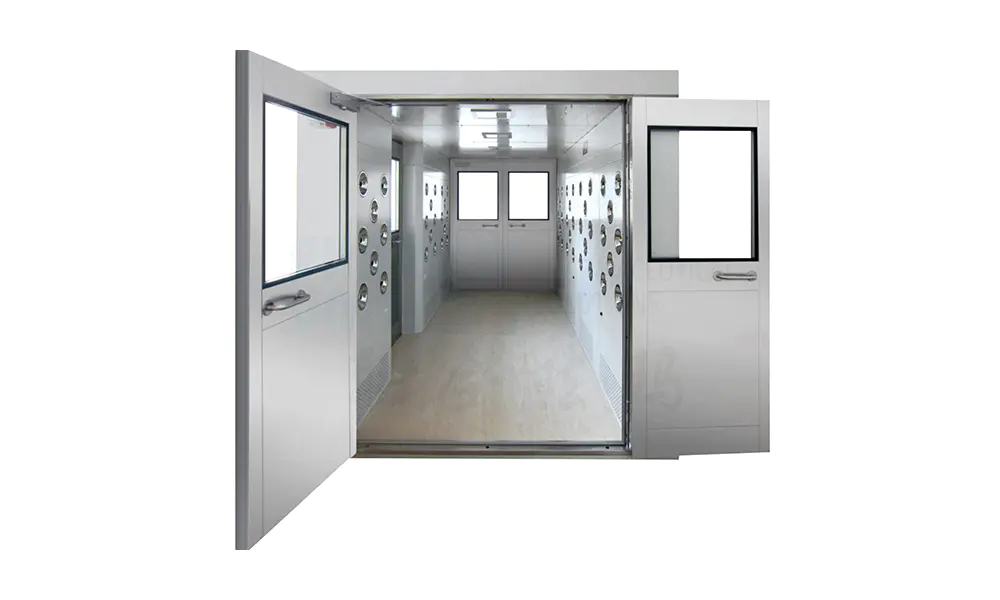
Air Shower
What Is an Air Shower?
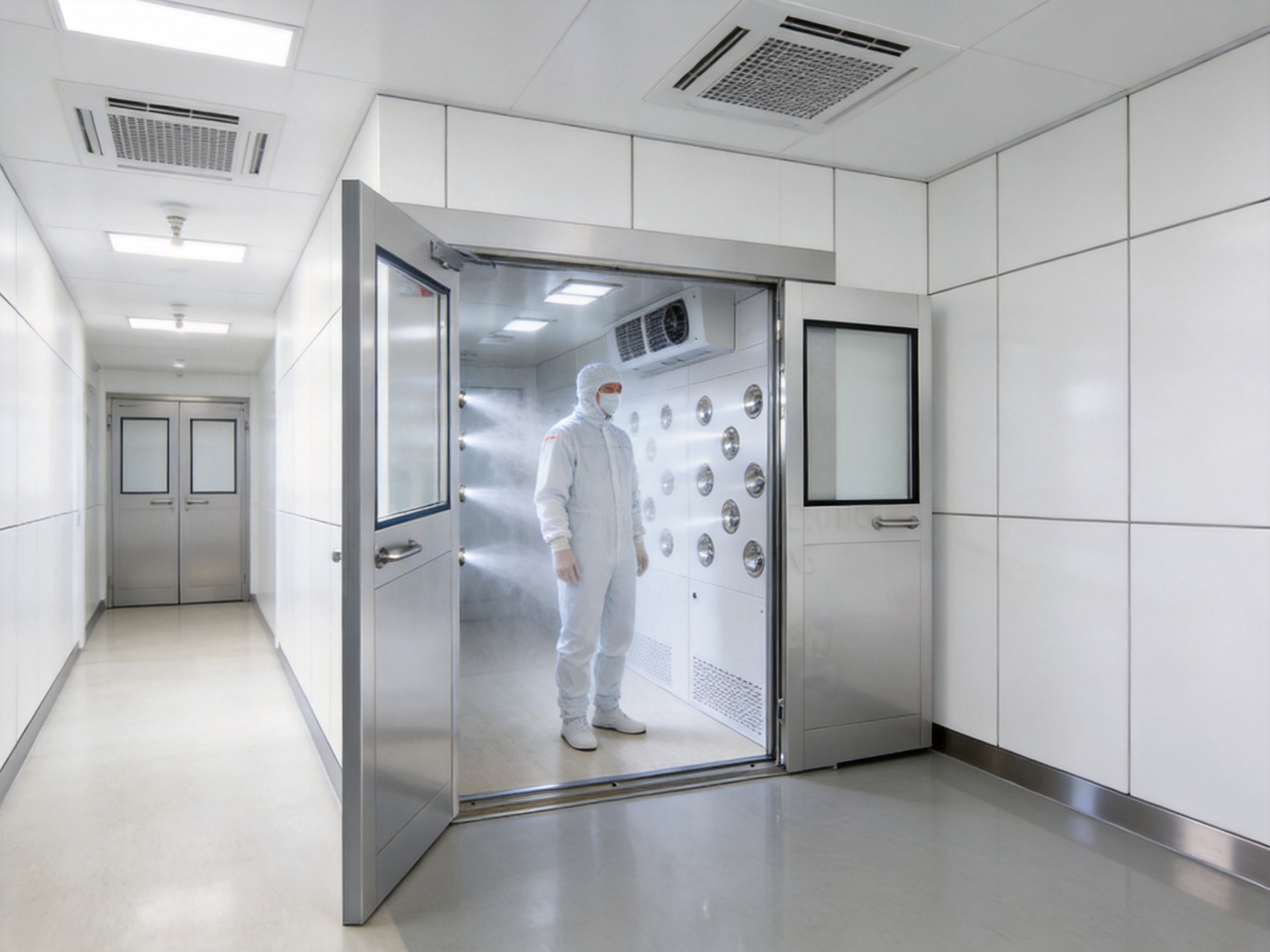
An air shower is an enclosed chamber fitted with air nozzles, fans, filters, controls, and access doors. After a person or item enters the chamber, high-velocity air jets are directed toward its surfaces. The air stream dislodges loose particles from garments, packaging, tools, containers, and equipment surfaces. The contaminated air is then captured, recirculated, or exhausted through the system according to the selected design.
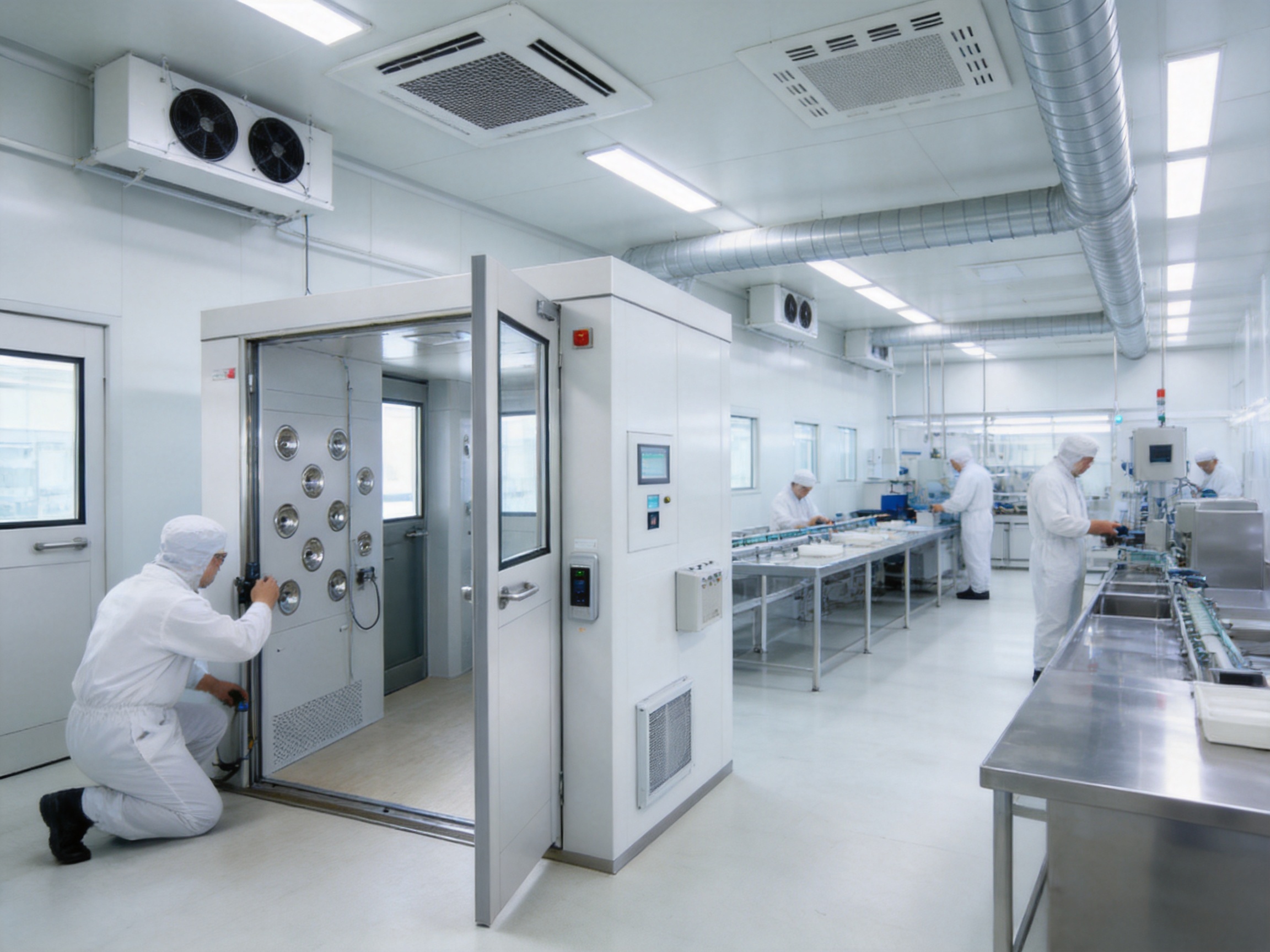
Air showers are generally positioned at the boundary between areas with different cleanliness requirements. They may be used at the entrance to a cleanroom, between a material preparation area and a production room, or as part of a personnel airlock. Depending on the project, the equipment may have interlocked doors so that both doors cannot be opened at the same time. This arrangement helps protect pressure differentials and reduces uncontrolled air exchange.
The equipment can be designed in various sizes and configurations. A compact personnel unit may be suitable for one person at a time, while a larger goods air shower may accommodate carts, pallets, containers, or manufacturing equipment. Since the required dimensions depend on the building layout, product dimensions, throughput, and operating procedure, customized sizing is often more practical than selecting a standardized chamber.
The main material specified for the air shower supplied by Pharma United is SS304 stainless steel. Stainless steel is widely used in cleanroom equipment because it provides corrosion resistance, mechanical durability, and a smooth surface that can be cleaned and disinfected efficiently. The final material arrangement may be adapted to the application, including internal wall surfaces, ceiling structures, door assemblies, nozzles, floor details, and external panels.
Why Air Showers Matter in Contamination Control
People are one of the most significant sources of particles in a controlled environment. Human skin, hair, fibers, footwear, packaging, and clothing can release particles during movement. Personnel may also carry particles from corridors, warehouses, production areas, or outdoor environments. Gowning procedures reduce this risk, but an air shower adds an additional control step between gowning and cleanroom entry.
Materials can also introduce contamination. Boxes, containers, carts, tools, spare parts, and equipment may have been stored or transported through areas that do not meet cleanroom requirements. Wiping and packaging procedures are useful, but they may be slow, inconsistent, or difficult to apply to irregular surfaces. A properly configured goods air shower can provide an additional automated treatment step before materials reach the cleanroom.
An air shower does not replace proper gowning, cleaning, maintenance, filtration, or environmental monitoring. Instead, it supports those measures. Its purpose is to reduce the particle load entering the controlled area and to make the entry process more consistent. The final performance depends on many factors, including air velocity, nozzle arrangement, filter selection, cycle time, chamber dimensions, door operation, pressure relationships, cleaning procedures, and user behavior.
For pharmaceutical and healthcare applications, the air shower may form part of a broader contamination-control strategy that includes personnel flows, material flows, pressure cascades, airlocks, changing rooms, and hygienic construction. For electronics manufacturing, it can help limit particles that might affect sensitive components, optical surfaces, or precision processes. For food processing, it may support hygienic zoning and reduce the transfer of dust or loose particles between areas.
Core Operating Principle
The operating principle is straightforward but requires careful engineering. A fan draws air through a filter or filtration section. The filtered air is delivered to nozzles or air outlets positioned around the chamber. These outlets direct air toward garments or material surfaces at sufficient velocity to loosen particles. The air then moves toward return grilles or a lower collection area before being filtered and recirculated or discharged.
Air distribution is one of the most important factors in air shower performance. If the nozzles are poorly positioned, some surfaces may receive strong airflow while other areas remain weakly treated. A well-designed arrangement considers the height, width, and depth of the chamber, as well as the location of personnel or goods during the cycle. Side-wall nozzles, ceiling nozzles, floor-level outlets, or other arrangements may be selected according to the application.
Cycle control also matters. A short cycle may not provide sufficient exposure, while an excessively long cycle may reduce productivity without delivering a proportional benefit. The appropriate duration depends on the air velocity, nozzle configuration, contamination risk, garment type, product geometry, and operating procedure. The control system can be configured to use automatic timing, manual start functions, emergency release, door interlocking, and status indication.
HEPA-filtered air is commonly used when high cleanliness is required. The filter selection should be based on the intended application and applicable project requirements. The supplied product information identifies the filter, fan, airflow sensor, differential pressure gauge, and PLC as configurable or project-dependent items rather than fixed universal specifications. This approach allows the equipment to be designed around actual performance requirements instead of forcing every project into one standard configuration.
Important Air Shower Components
Stainless Steel Chamber
The chamber creates a controlled space for the air treatment cycle. SS304 stainless steel offers a combination of strength, corrosion resistance, and cleanability suitable for many cleanroom applications. Smooth internal surfaces help limit particle accumulation and make routine wiping easier. Joints, corners, thresholds, and interfaces should be designed with attention to cleaning access and the avoidance of unnecessary ledges.
The chamber must also be compatible with the surrounding cleanroom construction. Its floor level, wall interfaces, ceiling height, door openings, and service connections should be coordinated during the design stage. Pharma United’s experience in manufacturing cleanroom panels, doors, windows, and other equipment supports this type of coordinated planning.
Air Nozzles and Air Distribution
Nozzles are responsible for converting the supply airflow into directed jets. Their arrangement affects the treatment of sleeves, shoulders, trouser legs, footwear, container sides, cart frames, and other difficult-to-reach areas. The nozzle material, shape, orientation, spacing, and maintenance access should be selected according to the intended use.
A personnel air shower may require a different distribution pattern from a goods air shower. Personnel systems generally focus on clothing surfaces and movement within the chamber. Goods systems must account for product dimensions, pallet height, cart geometry, packaging materials, and the possibility of sheltered areas. A customized layout can improve coverage while avoiding excessive pressure loss or unnecessary energy consumption.
Fans and Air Handling
Fans provide the airflow required for particle removal. The fan selection influences air volume, air velocity, noise, energy consumption, pressure capability, and service life. A reliable design balances the required air performance with the available electrical supply and the operating conditions of the site.
Because fan requirements vary according to chamber size and nozzle configuration, it is reasonable for the fan specification to remain project-dependent during the initial product selection stage. The engineering team can determine the appropriate fan arrangement after reviewing the required dimensions, air volume, target velocity, filtration resistance, cycle time, and local electrical standards.
Filtration
Filtration is essential because the air used to blow particles from personnel or goods should not introduce additional contamination into the chamber. HEPA filtration is widely selected for cleanroom air shower applications. Filter access, sealing, replacement procedures, and differential pressure monitoring should be considered during design.
Filter efficiency and classification must be confirmed against the project specification. Different facilities may use different standards, validation protocols, or filtration levels. A customized solution allows the filter section to be selected according to the cleanroom class, process sensitivity, environmental conditions, and required qualification documents.
Doors and Interlocking
Air shower doors control movement into and out of the chamber. Interlocking can help prevent both doors from being open simultaneously, thereby supporting the separation between adjacent areas. Door construction should be durable, easy to clean, and compatible with the expected frequency of use.
Access control may include push buttons, touch panels, card readers, emergency release devices, or other project-specific options. The correct arrangement depends on the facility’s personnel flow, security requirements, emergency procedures, and validation expectations.
Control System
The control system coordinates the entry cycle and equipment status. A basic system may include cycle timing, fan operation, door interlocking, emergency stop, and indicator lights. More advanced configurations may include programmable logic control, fault alarms, filter status monitoring, airflow monitoring, access records, and integration with the building management system.
The available product information lists the PLC as project-dependent. This is an advantage when a customer needs a specific control architecture or wishes to integrate the air shower with an existing automation platform. Rather than treating one control package as suitable for every application, the system can be developed around the facility’s operational and documentation requirements.
Advantages of a Customized Air Shower
Customization is especially important because cleanroom layouts vary widely. A facility may have restricted ceiling height, unusual door positions, narrow corridors, large material carts, special pressure requirements, or a high-throughput process. A preconfigured unit may not fit the available space or may provide an inefficient workflow.
A customized air shower can be designed according to the required external dimensions, internal clear space, door arrangement, nozzle layout, material grade, fan capacity, filter configuration, control logic, and finish. It can also be coordinated with cleanroom wall panels, floors, ceilings, airlocks, pass boxes, and HVAC systems. This reduces the risk of treating the equipment as an afterthought.
Customization can improve productivity. If the chamber is correctly sized for the expected cart or product, operators do not need to perform unnecessary repositioning. If the doors, controls, and emergency systems are placed according to the actual workflow, the entry procedure becomes easier to follow. If the internal surfaces are designed for rapid cleaning, maintenance time may be reduced.
Customization also supports future expansion. A pharmaceutical or electronics facility may begin with a small production area and later increase capacity. Early consideration of spare electrical capacity, service access, control integration, and modular construction can simplify future modifications.
Comparative Advantages Over Generic Competitor Equipment
Many manufacturers offer standard air shower cabinets. Standardization can reduce initial design time, but it may also create limitations when the project has unusual dimensions, strict documentation requirements, or a complete turnkey construction schedule. The air shower supplied through Pharma United’s cleanroom engineering approach is positioned as a configurable part of an integrated solution.
Integrated Cleanroom Compatibility
One important advantage is compatibility with the surrounding cleanroom. Pharma United manufactures metallic sandwich panels, HPL panels, cleanroom doors and windows, and other cleanroom components. This broader product range makes it easier to coordinate the air shower’s interfaces with the wall system, ceiling system, doors, flooring, HVAC layout, and service routes.
When equipment and room components are sourced through disconnected suppliers, interface issues may arise. Examples include mismatched dimensions, inconsistent finishes, difficult sealing details, unsuitable thresholds, or delayed responsibilities during installation. An integrated supplier can review these interfaces earlier and help reduce coordination problems.
Application-Based Engineering
A generic air shower may provide a fixed chamber size, fixed fan, fixed filter, and limited control options. These specifications may be acceptable for a simple application but may not be appropriate for a large goods air shower, a high-throughput pharmaceutical facility, or a project requiring special automation.
Pharma United’s product information identifies size as customized and leaves the fan, filter, airflow sensor, differential pressure gauge, and PLC open to project selection. This indicates an application-based engineering model. The customer can define the operating goal first, after which the equipment can be developed to match the required capacity and integration level.
Manufacturing Control
In-house or closely controlled manufacturing can provide advantages in quality consistency, production planning, and communication. Pharma United operates a 20,000-square-meter factory and has an annual output of more than 1,000 40HQ containers. These resources indicate substantial manufacturing capacity for cleanroom products and project orders.
A manufacturing facility with dedicated production resources can coordinate material preparation, panel fabrication, stainless steel processing, assembly, inspection, packing, and dispatch more effectively than a purely trading-based supply chain. It can also support repeat orders, replacement parts, and modifications for international projects.
Turnkey Project Support
An air shower is most effective when its performance is consistent with the room pressure, airflow, personnel flow, cleaning program, and material flow. Pharma United provides cleanroom design, material manufacturing, and on-site installation. This turnkey capability allows the air shower to be included in the complete engineering solution.
For customers seeking a cleanroom design and construction manufacturer, this can simplify project management. The supplier can participate in layout planning, equipment selection, manufacturing coordination, installation, commissioning support, and handover documentation. The result is a more unified approach than purchasing a standalone air shower without considering the rest of the facility.
International Project Experience
Pharma United has completed projects across Africa, the Middle East, South Asia, and other international markets. International project experience is valuable because cleanroom projects often involve different building conditions, electrical standards, shipping requirements, documentation practices, languages, and installation arrangements.
The company reports more than 20 years of industry experience and an engineering team with more than 10 years of average on-site experience. This background can support practical decisions about access routes, installation sequencing, local labor coordination, commissioning, and site constraints.
BIM and Installation Support
Building information modeling can assist with spatial coordination before fabrication. An air shower affects personnel circulation, material movement, door clearances, ceiling services, ductwork, electrical connections, and maintenance access. BIM visualization helps project teams review these relationships before equipment reaches the site.
Full installation services can further reduce the gap between design intent and completed construction. Site teams can support assembly, alignment, sealing, connection, testing, and coordination with other contractors. The exact scope should be confirmed in the project contract, but the availability of installation support is a useful advantage for overseas customers.
Manufacturing Process and Quality Considerations
The reliability of an air shower depends on more than the final appearance. Manufacturing processes must protect dimensional accuracy, surface quality, structural strength, cleanability, and serviceability. The following stages are important when producing a customized stainless steel cleanroom air shower.
Engineering Review
The process begins with a review of the project requirements. Important inputs include chamber size, personnel or goods use, expected throughput, door arrangement, cleanroom classification, air performance, filter type, electrical supply, controls, installation location, and maintenance access.
At this stage, the design team should identify possible conflicts with walls, columns, ceilings, floors, ducts, cable trays, fire systems, and material handling routes. If the unit is intended for a cart or pallet, the dimensions and turning radius should be confirmed. For personnel use, the number of users per cycle and the required movement pattern should be reviewed.
Material Preparation
SS304 stainless steel sheets, profiles, frames, fasteners, and accessories are prepared according to approved drawings. Material traceability and incoming inspection may be used to confirm the required grade, thickness, surface condition, and dimensional quality. Other materials, such as seals, insulation, filters, electrical components, and door hardware, should also be checked against the project specification.
Precision Cutting and Forming
Panels, frames, openings, and support components are cut and formed to the approved dimensions. Accurate processing helps maintain door alignment, nozzle positioning, panel fit, and overall chamber geometry. Proper edge treatment is important because sharp or poorly finished edges can create safety risks and complicate cleaning.
Welding and Surface Treatment
Stainless steel welding should be controlled to reduce distortion and maintain structural integrity. Welded areas may require grinding, polishing, passivation, or other finishing processes according to the specified surface standard. The objective is to provide smooth, durable, and cleanable surfaces while protecting the material’s corrosion resistance.
Assembly
During assembly, the chamber, doors, nozzles, filters, fans, control enclosure, sensors, lighting, and other components are installed. Service access should be checked at this stage. Filters must be replaceable without unnecessary dismantling, electrical components should be accessible for inspection, and the fan and nozzle arrangement should match the approved airflow design.
Factory Inspection
Before dispatch, the equipment may be checked for dimensions, appearance, door operation, interlock sequence, emergency release, electrical safety, fan operation, control functions, and component completeness. Depending on the project, functional testing or factory acceptance testing can be arranged.
Inspection documentation may include material records, electrical diagrams, component lists, operation manuals, maintenance instructions, test reports, and packing records. The required documentation should be agreed before production, especially for pharmaceutical and medical projects that require extensive qualification support.
Packing and Transportation
Cleanroom equipment must be packed to protect stainless steel surfaces, doors, filters, electrical components, and finished edges during transportation. International shipments require careful consideration of container loading, moisture protection, impact protection, lifting points, and unpacking procedures. Pharma United’s large export capacity and international project experience support the planning of overseas delivery.
Air Shower Selection Guide
Selecting an air shower should begin with the process rather than the product name. The customer should define what is entering the cleanroom, how often it will enter, what level of contamination control is required, and what space is available.
| Selection Item | Key Question | Why It Matters |
|---|---|---|
| Application | Will the unit serve personnel, goods, carts, or a combination? | Different users require different chamber dimensions, nozzle layouts, and operating procedures. |
| Size | What are the maximum height, width, length, and turning requirements? | The chamber must accommodate the user or product without blocking airflow or restricting movement. |
| Material | Which stainless steel grade and surface finish are required? | Material selection affects corrosion resistance, cleanability, durability, and compliance. |
| Filtration | What filter efficiency and monitoring method are required? | The filtration system must support the cleanroom’s contamination-control objectives. |
| Airflow | What air volume, velocity, and coverage are needed? | Air performance determines the effectiveness and cycle time of particle removal. |
| Controls | Is a basic controller, PLC, or building-management integration required? | Control complexity should match the facility’s operating and documentation requirements. |
| Doors | Are interlocks, access control, emergency release, or automatic operation needed? | Door logic affects pressure protection, safety, security, and workflow. |
| Maintenance | How will filters, fans, sensors, and control components be accessed? | Good service access reduces downtime and supports preventive maintenance. |
| Installation | Who will coordinate delivery, assembly, connections, and commissioning? | Defined responsibilities help prevent delays and interface problems at the site. |
Personnel Air Showers and Goods Air Showers
Personnel Air Showers
Personnel air showers are designed around human movement and gowning procedures. The chamber should allow the user to stand or move in a controlled manner while air jets reach the shoulders, sleeves, front, back, legs, and footwear. The cycle may be initiated automatically after the entry door closes or through a start button.
Personnel units should be easy to understand and operate. Clear status indicators, simple instructions, emergency release, and reliable door interlocking are important. The internal finish should support frequent cleaning and disinfection. If the unit is used by many workers each day, durability and maintenance access become especially important.
Goods Air Showers
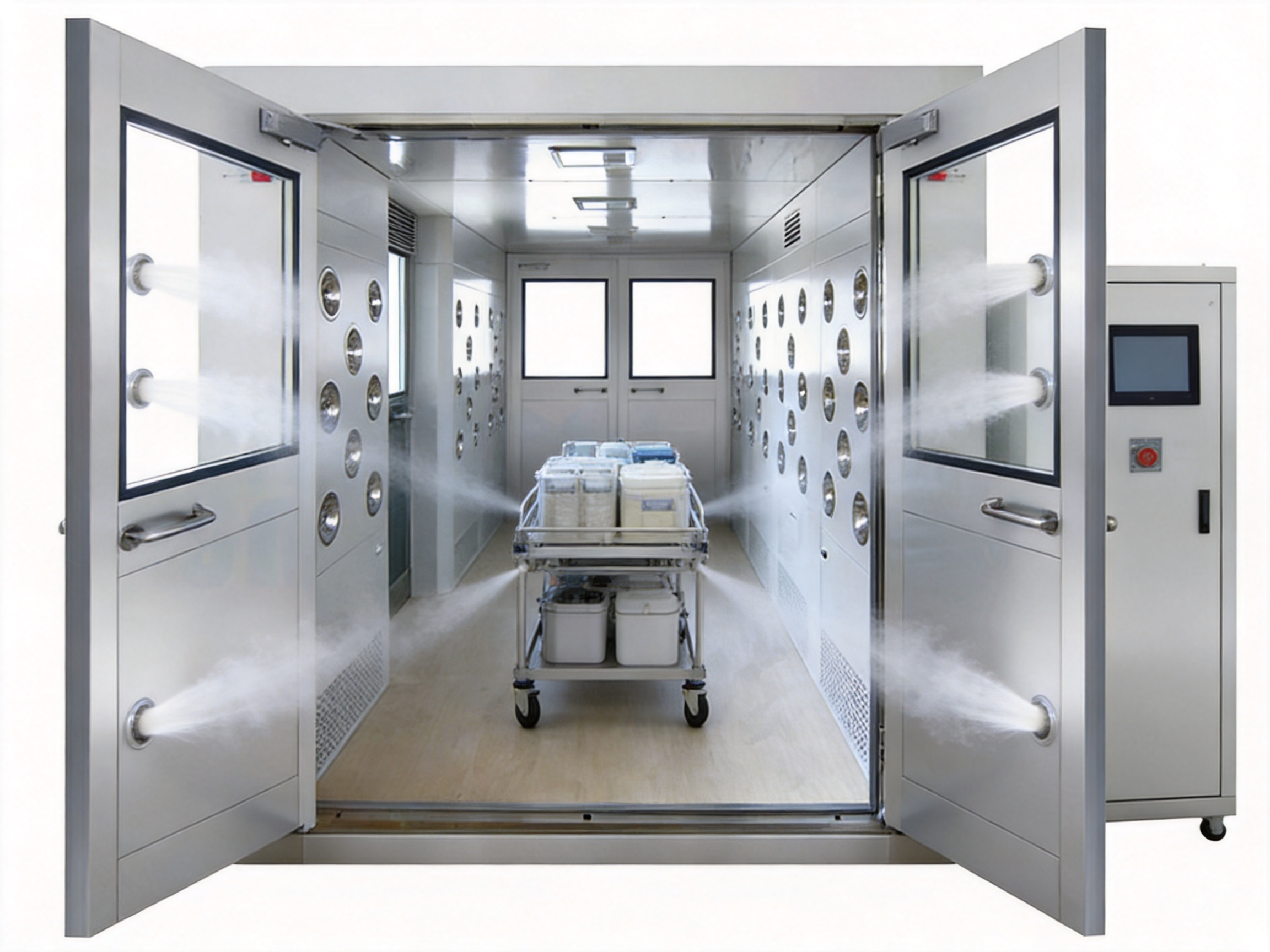
Goods air showers are designed for products, containers, carts, pallets, tools, or equipment. Their dimensions are often larger than personnel units, and their airflow distribution must account for the shape and arrangement of the load. A cart may block airflow to its lower frame, while a large container may create sheltered zones behind corners or stacked packages.
Goods systems may require wider doors, stronger floors, increased fan capacity, specialized ramps, and a control sequence adapted to material movement. The maximum load, wheel arrangement, pallet dimensions, and cleaning method should be defined during the design stage.
Combined Applications
Some facilities need both personnel and material entry but have limited space. A combined solution may be possible, although it must be carefully assessed. Different users may require different cycle settings, cleaning procedures, and traffic controls. In many cases, separate personnel and goods routes provide better contamination control and workflow clarity.
Applications Across Controlled Industries
Pharmaceutical Manufacturing
Pharmaceutical production requires careful control of particles, microorganisms, material movement, and personnel behavior. An air shower may be installed at the entrance to a production suite, weighing area, dispensing room, packaging area, or material airlock. It can support gowning and transfer procedures while helping reduce the particle burden carried into the cleanroom.
The equipment should be coordinated with the facility’s pressure cascade, cleaning validation, environmental monitoring, and qualification program. Materials of construction, control logic, filter monitoring, and documentation must be selected according to the applicable project requirements.
Laboratories
Research and testing laboratories may use air showers where sensitive experiments, controlled samples, or specialized equipment must be protected from particulate contamination. Because laboratory layouts often change, a compact or modular customized design can be useful. The air shower may also be integrated into a flexible cleanroom or modular laboratory enclosure.
Hospitals and Healthcare Facilities
Healthcare environments may use controlled access equipment in specialized production, isolation, research, sterile preparation, or medical device areas. The air shower should be selected in coordination with infection-control procedures, cleaning chemicals, accessibility requirements, and emergency arrangements.
Food Processing
Food processing facilities commonly separate hygienic zones according to product risk and processing stages. An air shower can help reduce dust, fibers, and loose particles transferred by workers or materials between zones. It should be integrated with handwashing, footwear control, gowning, sanitation, and traffic management procedures.
Electronics and Precision Manufacturing
In electronics manufacturing, particles can affect components, optical surfaces, assembly quality, and production yield. An air shower at the boundary of a controlled production area can help reduce the number of particles carried on garments, carts, packaging, and tools. The chamber design should be compatible with electrostatic-control procedures where required.
Installation and Commissioning
Installation planning should begin before the air shower arrives at the site. The project team should confirm the opening size, floor level, lifting route, temporary storage area, electrical supply, control cables, filters, ventilation interfaces, and required clearance for assembly and maintenance.
The unit should be positioned according to the approved layout. Door alignment, chamber level, wall connections, sealing, nozzle orientation, filter installation, fan connections, and control wiring should be checked. If the air shower is installed inside or beside a cleanroom, the surrounding construction must be protected from damage and contamination during the work.
Commissioning may include visual inspection, dimensional verification, door operation, interlock testing, emergency release testing, fan rotation, control sequence verification, airflow measurement, filter inspection, differential pressure checks, alarm checks, and cleaning inspection. The specific tests depend on the contract and the intended application.
For regulated industries, qualification may include design qualification, installation qualification, operational qualification, and performance qualification. Testing should be based on the approved user requirement specification and project validation plan. An air shower’s performance should be assessed as part of the overall contamination-control system rather than in isolation.
Operation and Maintenance
Operators should receive clear instructions before the air shower is placed into routine use. The procedure should explain how to enter, where to stand, how to position goods, how to respond to alarms, and what to do if a door or fan fault occurs. User behavior strongly influences the effectiveness of the system.
Routine cleaning should remove dust and residues from walls, floors, nozzles, door surfaces, thresholds, and return grilles. Cleaning agents should be compatible with the stainless steel finish, seals, floor materials, and other components. The cleaning frequency should reflect the contamination risk and traffic volume.
Filters require inspection and replacement according to pressure drop, operating hours, environmental conditions, or the facility’s preventive maintenance schedule. Differential pressure gauges or airflow sensors can help identify filter loading or fan performance changes. If the product is supplied without these components, they can be considered during customization according to the project’s monitoring needs.
Fans, motors, door hardware, sensors, control panels, emergency devices, and interlocks should be inspected periodically. Records should be maintained for cleaning, filter changes, repairs, alarms, and qualification tests. Preventive maintenance is generally less disruptive and less expensive than responding to an unexpected failure during production.
Energy and Sustainability Considerations
An air shower consumes energy through fans, lighting, controls, and sometimes heating or cooling requirements associated with air movement. Energy performance should therefore be considered during design. Appropriate chamber sizing, efficient fan selection, optimized cycle time, good sealing, and demand-based operation can help limit unnecessary consumption.
Oversizing may increase capital cost and energy demand, while undersizing can reduce effectiveness and create workflow problems. The best design balances air performance, contamination-control needs, throughput, and operating cost. A customized engineering approach helps avoid choosing a unit that is substantially larger or more complex than the application requires.
Durable stainless steel construction can also support long service life. Equipment that remains structurally sound and cleanable for many years may reduce replacement frequency and lifecycle waste. Repairable components, accessible filters, replaceable seals, and documented spare parts can further improve maintainability.
How Pharma United Supports Cleanroom Projects
Pharma United Co., Ltd. is a global provider of cleanroom solutions specializing in turnkey projects for pharmaceutical, healthcare, and industrial applications. Its services cover cleanroom design, material manufacturing, equipment supply, and on-site installation. This combination is relevant to air shower projects because the equipment must work in harmony with the room construction and operating process.
The company manufactures metallic sandwich panels, HPL panels, cleanroom doors and windows, HVAC systems, and various cleanroom equipment. Its own manufacturing facility supports stable quality, delivery planning, and cost control. Customers can therefore request an air shower as part of a broader integrated cleanroom solution rather than treating it as an unrelated accessory.
Pharma United has more than 20 years of industry experience, a 20,000-square-meter factory area, more than 60 staff members, and an annual output exceeding 1,000 40HQ containers. The company’s development includes the establishment of Shanghai Sinoarch Co., Ltd. in 2006, CESE International Co., Ltd. in 2014, the Kunshan factory and Pharma United Co., Ltd. in 2016, and a branch factory in Qianjiang, Hubei, in 2022. The Kunshan factory expanded in 2026 to increase production capacity.
The company reports completed projects across Africa, the Middle East, South Asia, and other international markets. Its engineering team has more than 10 years of average on-site experience and supports BIM visualization and full installation services. This combination of engineering knowledge, factory capacity, and international project experience strengthens its ability to deliver customized cleanroom engineering solutions.
For customers searching for cleanroom design and construction, cleanroom design and build, or an integrated cleanroom solution, the air shower can be developed as one component of a complete facility plan. The goal is to create a cleanable, serviceable, and operationally effective entry system that reflects the customer’s process instead of simply supplying a standard enclosure.
Project Information Required for a Quotation
To prepare an accurate proposal, the customer should provide the intended application, available space, maximum load or number of users, preferred material, required filtration, target cleanroom classification, door arrangement, electrical supply, control preferences, installation location, delivery destination, and any applicable standards.
A layout drawing or building plan is particularly useful. It allows the engineering team to review the approach corridor, exit route, wall thickness, ceiling height, maintenance clearance, material flow, and service connections. Photographs of the installation area may also help identify practical constraints.
The customer should also clarify whether the air shower is part of a new cleanroom or a retrofit project. A new project can generally coordinate dimensions and services earlier, while a retrofit may require split delivery, restricted access, field modification, or special installation procedures.
Frequently Asked Questions
What is the main purpose of an air shower?
The main purpose is to remove loose particles from personnel, goods, tools, carts, or equipment before they enter a controlled environment. It uses directed filtered air jets to dislodge particles and reduce the contamination load carried into the cleanroom.
Does an air shower replace gowning?
No. An air shower supports gowning and other contamination-control procedures but does not replace them. The facility should continue to use appropriate garments, cleaning, access control, environmental monitoring, and personnel training.
Can the air shower be customized?
Yes. The product is listed with a customized size, and the fan, filter, airflow sensor, differential pressure gauge, and PLC can be selected according to the project. Door configuration, nozzle arrangement, material finish, controls, and installation interfaces can also be reviewed during engineering.
What material is used for the air shower?
The main material specified for this product is SS304 stainless steel. It is widely used because it offers good corrosion resistance, durability, and cleanability for many cleanroom applications. The required thickness and finish should be confirmed in the project specification.
Can it be used for materials instead of people?
Yes. Goods air showers can be designed for carts, containers, pallets, tools, equipment, and other materials. The chamber size, floor strength, door dimensions, fan capacity, and nozzle arrangement should be selected according to the maximum load and product geometry.
Is a HEPA filter included as standard?
The product description explains that air showers use high-velocity HEPA-filtered air, while the equipment information lists the filter as project-dependent. The final filter type, efficiency, quantity, access method, and monitoring arrangement should therefore be confirmed in the quotation and technical specification.
Can the air shower connect to a building management system?
It may be possible, depending on the selected control architecture. A PLC, sensors, alarms, communication modules, or other interfaces can be considered where integration with the facility automation or building management system is required.
How are the doors controlled?
Door control may include interlocking, cycle timing, status indicators, emergency release, push-button operation, or access control. The correct sequence depends on the cleanroom layout, pressure relationships, safety requirements, and operating procedure.
How often should the air shower be cleaned?
Cleaning frequency depends on traffic, contamination risk, product sensitivity, and the facility’s approved sanitation procedure. The floor, walls, nozzles, door surfaces, thresholds, and return grilles should be inspected regularly and cleaned with compatible agents.
How often should the filters be replaced?
Filter replacement should be based on the manufacturer’s instructions, pressure drop, airflow performance, operating hours, and the facility’s preventive maintenance program. A fixed calendar interval may be used, but performance data should also be considered.
Can Pharma United install the air shower overseas?
Pharma United provides on-site installation services and has experience with international projects in Africa, the Middle East, South Asia, and other markets. The exact installation scope, travel arrangements, commissioning responsibilities, and local coordination should be defined in the project agreement.
Why is integrated supply useful for an air shower project?
An integrated supplier can coordinate the air shower with cleanroom panels, doors, windows, HVAC systems, flooring, electrical services, and personnel or material flows. This can reduce interface problems and make the overall cleanroom design and construction process more coordinated.
Conclusion
An air shower is a practical component of a comprehensive contamination-control strategy. By directing high-velocity filtered air across people or goods before cleanroom entry, it helps reduce loose particles and supports more consistent transfer procedures. Its effectiveness depends on correct sizing, air distribution, filtration, door control, cleaning, maintenance, and integration with the surrounding facility.
The air shower supplied by Pharma United is based on a customized cleanroom equipment approach. SS304 construction, configurable filtration and airflow systems, optional monitoring and control functions, and project-specific dimensions allow the equipment to be adapted to different applications. Compared with a purely standard competitor product, an integrated solution can offer stronger compatibility with cleanroom panels, doors, HVAC systems, installation requirements, and future expansion plans.
Pharma United’s manufacturing capacity, factory resources, engineering experience, BIM capability, international project background, and turnkey installation support provide additional value for customers seeking a complete cleanroom engineering solution. Whether the requirement involves a pharmaceutical production area, laboratory, hospital, food processing zone, electronics factory, or industrial cleanroom, the air shower can be engineered as part of a reliable and maintainable controlled environment.
The best project outcome begins with a clear understanding of the process, traffic flow, contamination risk, available space, and qualification requirements. With these factors defined, the air shower can be designed not only to fit the room, but also to support the operational goals of the entire cleanroom.
References
1. International Organization for Standardization. ISO 14644 Series: Cleanrooms and Associated Controlled Environments.
2. International Organization for Standardization. ISO 14644-1: Classification of Air Cleanliness by Particle Concentration.
3. International Organization for Standardization. ISO 14644-4: Design, Construction, and Start-Up of Cleanrooms and Associated Controlled Environments.
4. International Organization for Standardization. ISO 14644-5: Operations of Cleanrooms.
5. International Society for Pharmaceutical Engineering. Baseline Guide for Pharmaceutical Manufacturing Facilities.
6. World Health Organization. Good Manufacturing Practices for Pharmaceutical Products.
7. United States Pharmacopeia. General Principles for Controlled Environments and Pharmaceutical Manufacturing.
8. Air Filtration and Cleanroom Engineering Practice: Principles of HEPA Filtration, Airflow Distribution, and Contamination Control.
9. Cleanroom Design and Construction Practice: Materials, Pressure Cascades, Personnel Flow, and Material Transfer.
10. Pharma United Co., Ltd. Product and Company Information for Customized Cleanroom Equipment and Turnkey Cleanroom Engineering Solutions.
Product: Air Shower



-
Mobile
+86-177 1554 8238
-
E-mail
chin@pharma-united.com
-
Address
No.58 Beiyuan Road, Dianshanhu Town, Kunshan City, Jiangsu Province, China
Copyright © Pharma United Co., Ltd. Rights Reserved.
OEM/ODM Cleanroom Engineering Solution Manufacturers
