

 English
 русский
 Français
 Español
 عربى

HEPA Filters for High-Performance Cleanroom Air Control
High-efficiency particulate air, or HEPA, filters are among the most important components in a cleanroom HVAC system. They form the final filtration barrier between conditioned supply air and the controlled environment, helping reduce airborne particles that could affect pharmaceutical products, medical procedures, electronic components, laboratory work, food production, and other sensitive processes. A well-designed HEPA filter does more than capture dust. It supports stable environmental control, protects products from contamination, helps maintain room classifications, and contributes to the reliability of the entire cleanroom operation.
Pharma United Co., Ltd. provides HEPA filters for cleanroom HVAC systems and specialized cleanroom equipment. The filters are suitable for pharmaceutical factories, laboratories, hospitals, operating rooms, food workshops, electronics cleanrooms, air showers, pass boxes, laminar airflow units, and weighing booths. They can be incorporated into new cleanroom construction projects, facility upgrades, modular cleanrooms, and equipment-based air-cleaning applications.
The performance of a HEPA filter depends on much more than the filter media alone. The frame, gasket, separator or separatorless construction, airflow direction, sealing method, installation arrangement, testing procedure, and compatibility with the surrounding HVAC system all influence the result. For this reason, a reliable supplier must combine filtration knowledge with manufacturing discipline, engineering coordination, and practical installation experience.
This article explains the operating principles, construction, applications, selection criteria, manufacturing strengths, and project advantages of HEPA filters supplied for controlled environments. It also compares HEPA filtration with other filtration stages and describes how an integrated cleanroom manufacturer can deliver a more dependable result than a supplier offering only an isolated filter component.
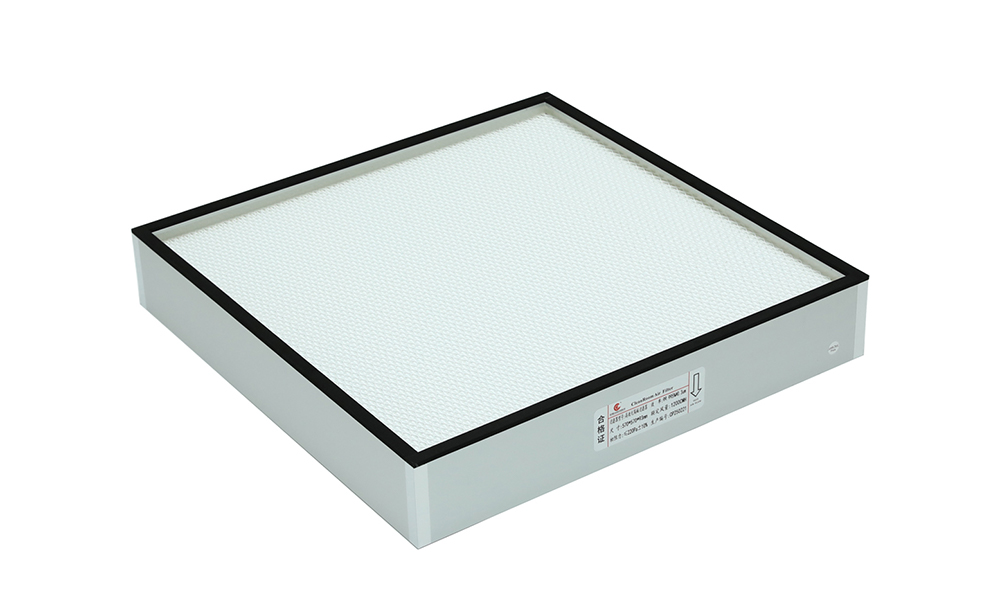
HEPA Filter
1. The Role of HEPA Filtration in a Cleanroom
A cleanroom is designed to control airborne particles, microorganisms, temperature, humidity, pressure, airflow patterns, and other environmental conditions. Among these variables, airborne particulate control is one of the most visible functions of the ventilation system. Even when walls, ceilings, doors, and floors are correctly designed, uncontrolled supply air can introduce contamination into the room.
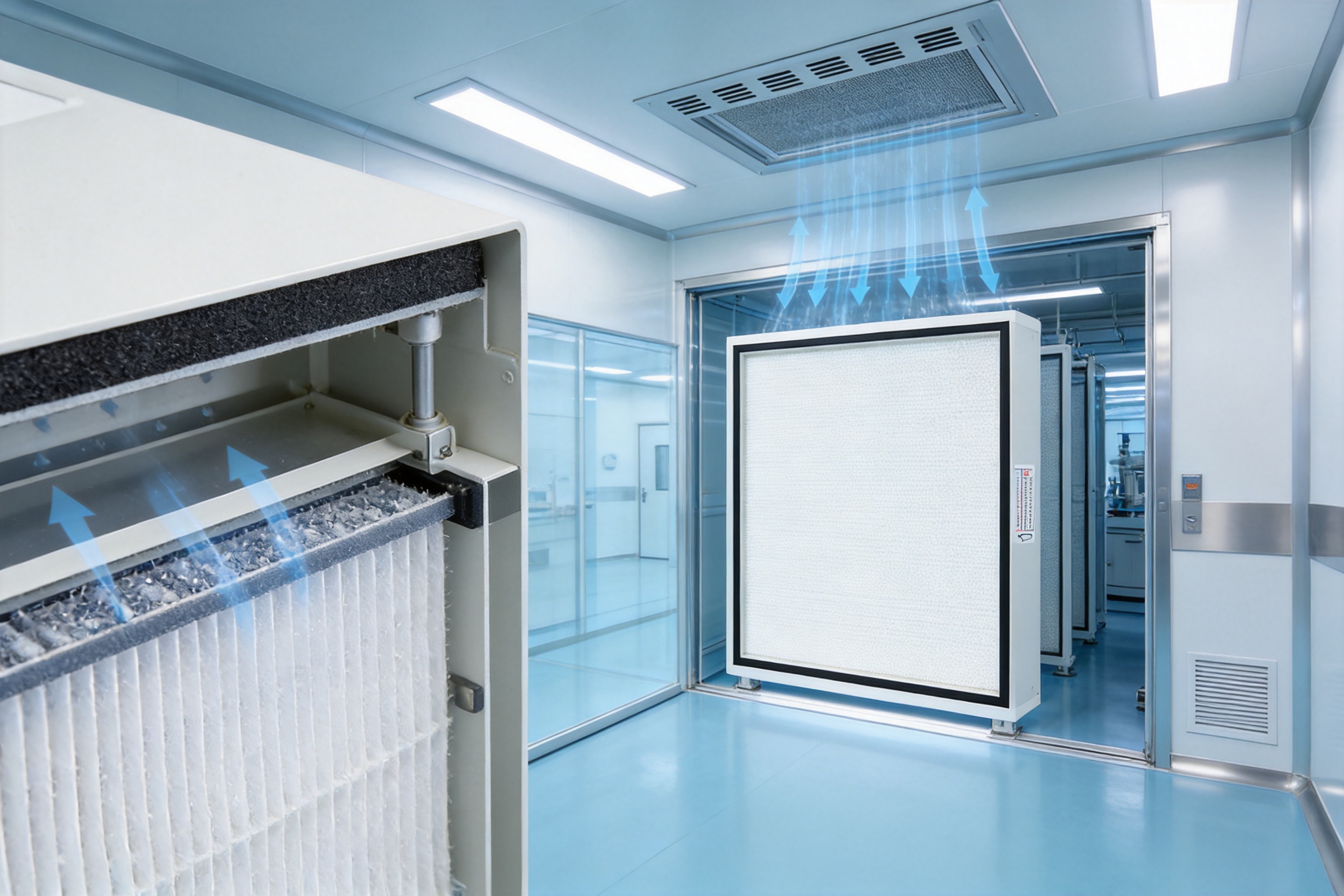
HEPA filters are normally positioned downstream of the air-handling and conditioning stages. Air first passes through the ventilation system, where larger particles and a portion of the dust load may be removed by primary and medium filters. The air then reaches the HEPA filter, which provides a much finer level of filtration before the air enters the cleanroom or a local clean-air device.
The final filter stage is important because the air must be clean at the point of delivery. A filter that performs well in isolation may not provide the expected room result if it is installed with damaged gaskets, an unsuitable housing, incorrect airflow, or unsealed joints. Cleanroom filtration must therefore be considered as a complete air-delivery system rather than as a single replaceable component.
HEPA filters are used in several supply configurations. They may be installed in terminal filter housings above a cleanroom ceiling, within fan filter units, inside laminar airflow cabinets, in air showers, in pass boxes, or in specialized equipment such as weighing booths. In each case, the filter has the same general purpose: to remove fine airborne particles from the air stream before that air reaches the critical zone.
In pharmaceutical and healthcare applications, HEPA filtration helps support hygienic and controlled environments. In electronics manufacturing, it assists in protecting sensitive components from particulate contamination. In laboratories, it helps create repeatable working conditions. In food workshops, it can contribute to controlled production areas when applied as part of a complete hygienic ventilation strategy.
2. How a HEPA Filter Works
HEPA media is typically manufactured from a dense network of very fine fibers. The media is arranged in pleats so that a large filtration surface can be placed inside a relatively compact frame. Increasing the media area allows the filter to process the required volume of air while managing pressure drop and service life.
Particle capture occurs through several physical mechanisms. Larger particles may be intercepted because they cannot follow the air stream around individual fibers. Smaller particles may be captured by diffusion as their random movement causes them to contact the fibers. Intermediate particles can be affected by inertial impaction, particularly when their momentum prevents them from following changes in airflow direction. The combined effect of these mechanisms allows HEPA media to remove extremely fine airborne particulate matter.
The phrase “high efficiency” does not mean that a filter captures every particle under every operating condition. Performance is related to the filter grade, test method, airflow, pressure differential, media condition, sealing quality, and installation. A responsible selection process should therefore identify the required efficiency classification and test standard rather than relying only on general terms.
Filter efficiency is also different from room cleanliness. The filter may be highly efficient while the room still fails to meet its required condition because of poor airflow distribution, excessive personnel movement, inadequate gowning, leakage at the terminal housing, unsuitable construction materials, or ineffective cleaning procedures. HEPA filters are essential, but they function as one part of a wider contamination-control system.
The filter frame and sealing system are particularly important. Air that bypasses the media through gaps, damaged seals, or poorly fitted housings can reduce the practical efficiency of the installation. A well-manufactured filter should therefore provide dimensional consistency, stable media support, secure bonding, and a reliable interface with the equipment or ceiling system.
3. Product Construction and Main Components
3.1 Filter Media
The filtration media is the active element that captures airborne particles. It is folded into multiple pleats to increase effective surface area. The design must balance filtration efficiency, airflow resistance, structural strength, and service life. A larger media area can help reduce the air velocity through the media, although the final result depends on the complete design and operating conditions.
Media selection should consider the intended application. Pharmaceutical facilities may require consistent performance in a controlled HVAC system. Operating rooms may prioritize dependable terminal filtration and ease of maintenance. Electronics facilities may focus on stable low-particle performance. Equipment such as laminar airflow units may require specific dimensions, airflow volume, and pressure characteristics.
The media is supported so that it remains stable during transport, installation, and operation. Excessive movement or deformation can damage the pleats and change the airflow resistance. Manufacturing controls should ensure that the media is folded evenly and remains securely bonded to the frame or separators.
3.2 Filter Frame
The frame provides the structural shape of the filter and allows it to be installed in a ceiling grid, housing, fan filter unit, or equipment cabinet. Frames may be made from materials such as aluminum, galvanized steel, stainless steel, or other suitable constructions depending on the application and environmental requirements.
Frame material influences corrosion resistance, cleanability, weight, mechanical strength, and compatibility with the surrounding cleanroom. Stainless steel may be appropriate for demanding hygienic environments, while other metal constructions may offer a practical balance of cost and performance for general HVAC applications.
Dimensional accuracy is essential. A filter that does not fit its housing correctly can create installation difficulty or increase the risk of bypass leakage. For projects involving multiple filter banks, consistent dimensions also make ceiling layout, maintenance planning, and replacement more straightforward.
3.3 Gaskets and Sealing Arrangements
Gaskets are used to form a seal between the filter and its housing or mounting surface. Depending on the design, the gasket may be positioned on the upstream or downstream side, and the filter may use a gel seal, knife-edge arrangement, dry gasket, or another engineered sealing method.
The most suitable sealing arrangement depends on the application, equipment design, maintenance method, and required level of leakage control. The gasket must remain resilient and maintain contact pressure during normal operation. It should also be compatible with the temperature, humidity, cleaning agents, and installation conditions expected in the facility.
3.4 Separators and Support Components
Some filter designs use separators to maintain pleat spacing and support the media. Other designs use separatorless construction with specially formed pleats and adhesive systems. Both approaches can be used in professional filtration applications when properly designed and manufactured.
Support components must be securely bonded and positioned. Uneven spacing can create localized resistance, reduce usable media area, or cause mechanical stress. A controlled production process helps ensure that every filter has a consistent internal structure.
3.5 Protective and Identification Features
Filters may include protective screens, airflow arrows, product labels, batch information, dimensions, efficiency data, and installation instructions. These features support traceability and reduce the risk of incorrect installation.
Protective packaging is also important. HEPA filters can be damaged by impact, moisture, excessive vibration, or improper handling. Packaging should protect the frame, media, and gasket during factory storage, shipment, and movement into the cleanroom area. The packaging design should also support inspection before installation without unnecessarily exposing the media.
4. Filtration Stages: Primary, Medium, HEPA, and ULPA
A cleanroom air system may include several filtration stages. Each stage has a different role, and the stages should be selected as a coordinated system.
| Filter stage | Primary function | Typical position | Key selection concern |
|---|---|---|---|
| Primary filter | Captures larger dust and protects downstream components | Fresh-air inlet or initial air-handling section | Dust-holding capacity and low operating cost |
| Medium filter | Removes smaller particles and reduces the load on final filters | Intermediate air-handling section | Efficiency, pressure drop, and service life |
| HEPA filter | Provides high-efficiency final filtration for controlled spaces | Terminal ceiling, HVAC unit, or clean-air equipment | Required efficiency, airflow, sealing, and test performance |
| ULPA filter | Provides an even higher level of fine-particle filtration for specialized applications | Critical process equipment or highly controlled environments | Very high efficiency, pressure drop, and system compatibility |
Primary and medium filters are valuable because they protect HEPA filters from premature loading. If large dust reaches the final filter, the pressure drop may increase more quickly and the operating life may be shortened. A staged filtration system can improve energy management and reduce maintenance frequency when properly designed.
HEPA and ULPA filters should not be selected solely according to the idea that the highest available efficiency is always the best option. A higher-efficiency filter may create additional pressure drop, require a stronger fan, increase energy consumption, or provide no practical benefit for the intended room classification. The correct choice is the one that satisfies the required contamination-control objective while maintaining a balanced system.
Pharma United can coordinate primary filters, medium filters, HEPA filters, and ULPA filters according to the project application. This broader product range makes it easier to establish a compatible filtration train instead of combining unrelated components from different sources.
5. Applications of HEPA Filters
5.1 Pharmaceutical Manufacturing
Pharmaceutical production often requires controlled areas for dispensing, weighing, compounding, filling, packaging, and laboratory testing. These areas may have different cleanliness, pressure, temperature, and airflow requirements. HEPA filters are commonly installed in air-handling systems and terminal supply units to reduce the introduction of airborne particles into the process environment.
In pharmaceutical projects, filtration must be coordinated with room zoning, personnel and material flows, pressure cascades, cleaning procedures, and validation requirements. A filter supplier that understands the broader cleanroom environment can provide more useful support than one that only supplies a standard size without considering the installation arrangement.
Weighing booths and sampling booths may use HEPA filters to create a controlled local work zone. The filter must be matched with the booth fan, airflow pattern, working height, and exhaust arrangement. The objective is not only to clean the air but also to help establish a stable and practical airflow pattern around the operator and product.
5.2 Hospitals and Operating Rooms
Hospitals and operating rooms require dependable ventilation and filtration to support hygienic conditions. HEPA filters may be installed in terminal supply systems, specialized operating-room units, isolation areas, laboratories, and other critical spaces.
Healthcare applications can place strong emphasis on cleanability, reliable sealing, maintenance access, noise control, and operational continuity. Filter dimensions and replacement procedures should be planned in advance so that maintenance can be completed efficiently without unnecessary disruption to clinical activities.
5.3 Laboratories
Laboratories may have varied requirements depending on the work performed. Research laboratories, testing laboratories, microbiology facilities, and analytical areas may use HEPA filtration as part of their general ventilation or local clean-air equipment.
Where hazardous substances are handled, the complete containment and exhaust strategy must be designed by qualified professionals. A HEPA filter can remove particles from an air stream, but it should not be treated as a substitute for appropriate biological, chemical, or process safety controls.
5.4 Electronics and Precision Manufacturing
Fine particles can affect sensitive electronic components, optical products, precision assemblies, and other high-value manufacturing processes. HEPA filters help provide clean supply air for cleanrooms, production areas, inspection rooms, and local laminar airflow equipment.
Electronics facilities may also require careful control of airflow velocity, temperature, humidity, electrostatic conditions, and material selection. The filter system must be integrated with the cleanroom design rather than selected independently of these factors.
5.5 Food Workshops
Food production areas may use controlled air filtration to support hygienic processing and reduce unwanted airborne contamination. The application depends on the product, process, room classification, local regulations, and cleaning regime.
For food workshops, filter frames and surrounding housings should be compatible with the intended cleaning and maintenance practices. The filter itself is only one element of a sanitary environment that also includes suitable surfaces, drainage, personnel procedures, material movement, and equipment hygiene.
5.6 Air Showers and Pass Boxes
Air showers use filtered air to remove loose particles from personnel or material surfaces before entry into a cleanroom. Pass boxes use controlled transfer conditions to reduce contamination movement between areas. Both systems may employ HEPA filters as part of their air circulation loops.
Because air showers and pass boxes are compact equipment, the filter must be matched to a specific fan, internal layout, nozzle arrangement, and access panel. Correct dimensions and low leakage at the frame are especially important because bypass air can compromise the intended cleaning or transfer function.
5.7 Laminar Airflow Units
Laminar airflow units provide a localized clean-air zone for product handling, laboratory work, preparation, or other sensitive operations. The terminal HEPA filter is usually installed across a substantial portion of the working-zone ceiling or rear supply surface.
Uniform airflow distribution is essential. The filter must work with the diffuser, blower, plenum, and internal baffles to create an even flow. A filter selected only by nominal dimensions may not provide the correct pressure and airflow performance for the unit.
6. Advantages Compared with Generic Filter Supply
Many suppliers can offer a filter that appears suitable from its external dimensions. However, cleanroom projects require more than a basic component transaction. The advantages of a professional, integrated supply approach become clear in the following areas.
6.1 Application-Based Selection
A generic supplier may offer a standard catalog size without reviewing the actual airflow, room classification, housing design, or operating conditions. An experienced cleanroom manufacturer begins with the application. The supplier can review whether the filter is intended for a terminal ceiling, fan filter unit, air shower, pass box, laminar airflow unit, or weighing booth, then recommend a compatible construction.
This approach helps reduce the risk of selecting a filter with excessive resistance, inadequate capacity, incorrect sealing, or unsuitable dimensions. It also makes future maintenance and replacement planning easier.
6.2 Coordination with Cleanroom Materials
HEPA filters are installed alongside cleanroom panels, ceilings, doors, windows, HVAC systems, lighting, and equipment. When these components are supplied by unrelated vendors, the interfaces may require additional coordination at the construction site.
A company that manufactures cleanroom panels, doors, windows, HVAC-related products, and equipment can review the interaction between the filter and the surrounding system. This may simplify ceiling openings, terminal housings, access panels, service clearances, and installation sequencing.
6.3 Consistent Manufacturing
Filter consistency matters when a project contains dozens or hundreds of units. Variations in frame dimensions, gasket placement, airflow resistance, or labeling can complicate installation and maintenance. A controlled factory process helps reduce variation and supports repeatable project quality.
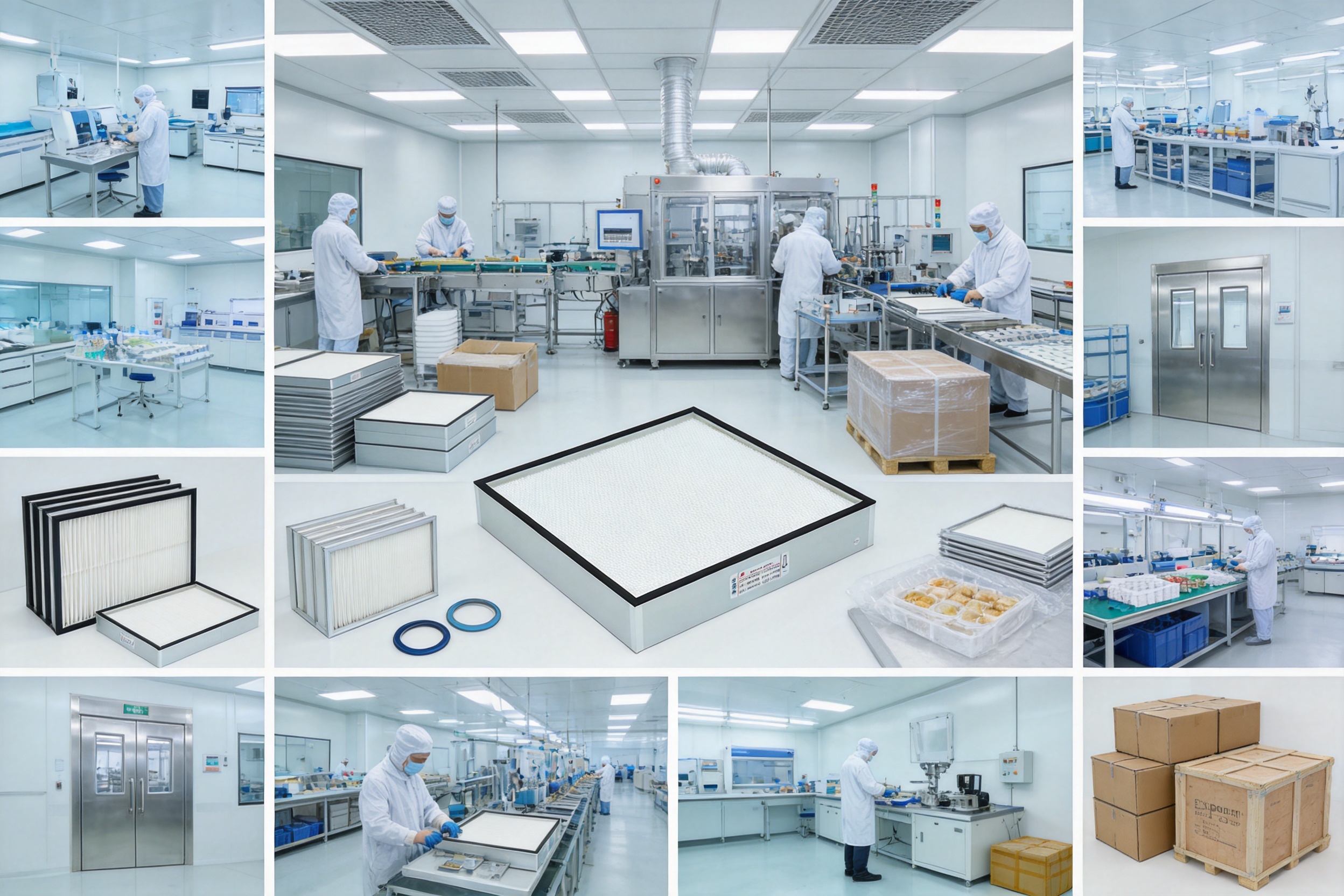
Pharma United operates its own manufacturing facility and maintains production capabilities for cleanroom materials and equipment. This allows the company to manage manufacturing, packaging, and project coordination more directly than a trading-only business.
6.4 Custom Dimensions and Project Adaptability
Cleanroom projects do not always use a single standard size. Ceiling grids, fan filter units, pass boxes, air showers, and local clean-air devices may require different dimensions. Customization may also be needed for frame materials, gasket arrangements, access requirements, or airflow connections.
Custom production should not mean uncontrolled variation. It should be based on approved drawings, documented specifications, dimensional checks, and clear identification. The ability to produce project-specific configurations is valuable when it is supported by an organized engineering and quality process.
6.5 Integrated Engineering Support
Pharma United provides cleanroom design, material manufacturing, and on-site installation services. This integrated capability can help connect filter selection with room layout, HVAC design, ceiling coordination, equipment placement, and installation planning.
For customers purchasing a complete cleanroom, the filter is not treated as an isolated item. It becomes part of an engineered solution that considers the required air changes, pressure relationships, supply locations, return-air paths, maintenance access, and operational needs of the facility.
6.6 International Project Experience
Cleanroom projects in different countries may involve different climatic conditions, construction practices, codes, inspection procedures, and logistics requirements. Experience in Africa, the Middle East, South Asia, and other international markets helps a supplier anticipate practical issues such as shipping protection, site access, local labor coordination, spare parts, and installation sequencing.
International experience does not replace compliance with local regulations. It does, however, help the project team prepare more effectively and communicate technical requirements across different organizations.
7. Manufacturing Process and Quality Control
The quality of a HEPA filter is established through a series of controlled manufacturing operations. The following process represents the main stages that should be managed in a professional production environment.
7.1 Technical Review and Specification Confirmation
Production should begin with a review of the required dimensions, filter grade, airflow, pressure characteristics, frame material, gasket position, sealing arrangement, and application. The supplier should confirm whether the filter will be installed in a ceiling system, HVAC unit, equipment cabinet, or specialized clean-air device.
For project orders, drawings and schedules should be checked against the cleanroom layout. Any deviation between the filter schedule and the equipment opening should be resolved before production. This early review reduces the possibility of site modifications and installation delays.
7.2 Material Inspection
Incoming materials should be checked for type, dimensions, condition, and identification. Important materials may include filter media, frame profiles, gaskets, adhesives, separators, protective screens, labels, and packaging components.
Material inspection helps ensure that the production line uses the approved components. It also supports traceability if a question arises during installation, testing, or future replacement.
7.3 Media Pleating
The filter media is pleated to create the required surface area. Pleat height, spacing, alignment, and stability should be controlled during production. Uneven pleats can affect pressure drop and create stress within the filter pack.
Modern production equipment can improve repeatability, but equipment alone is not sufficient. Operators and quality personnel must also verify the output and identify unusual conditions such as media tearing, folding defects, contamination, or dimensional variation.
7.4 Pack Assembly and Bonding
The pleated media pack is assembled with the frame and support components. Adhesive or bonding material is applied to establish a stable connection between the media and the frame. The bonding process must provide continuity and adequate strength without obstructing the usable media area.
Attention to adhesive application is important because gaps in the bond can create bypass routes. Excess adhesive can also affect airflow or interfere with assembly. Controlled application tools, curing conditions, and visual inspection help improve consistency.
7.5 Frame Assembly and Gasket Installation
The filter frame is assembled to the specified dimensions and checked for squareness. The gasket is then installed in the correct position with continuous contact and clean joints. Corners deserve particular attention because poor gasket connections may create leakage paths.
Where a project requires a special sealing configuration, the production team should use approved drawings and work instructions. The finished filter should clearly indicate the airflow direction and installation orientation.
7.6 Dimensional and Appearance Inspection
Finished filters should be checked for length, width, depth, squareness, gasket position, frame condition, media appearance, labels, and protective components. Filters with damaged corners, loose parts, visible media defects, or incomplete bonding should not be released for shipment.
7.7 Performance Testing
Depending on the product specification and project requirements, filters may undergo tests related to airflow resistance, efficiency, leakage, structural integrity, and visual quality. The applicable test method should be agreed before production and should be suitable for the specified filter class.
Testing records support product traceability and provide useful documentation for project handover. For cleanroom applications, the installed system may also require field testing after installation. Factory testing and site testing serve different purposes: factory testing assesses the product, while field testing assesses the installed filter and its surrounding housing.
7.8 Packaging and Shipment
After inspection, filters should be protected against impact, moisture, dust, and compression. Packaging should prevent movement inside the shipping carton or crate. For international projects, shipment planning should consider container loading, stacking limitations, customs documentation, and site storage conditions.
Pharma United’s manufacturing and export experience supports coordinated delivery for complete cleanroom projects. The company reports an annual output of more than 1,000 40HQ containers and operates a factory area of approximately 20,000 square meters, providing a substantial production base for large and repeat orders.
8. Engineering Strengths of the Manufacturer
Product quality is strengthened when the manufacturer has direct experience with complete cleanroom construction. Pharma United specializes in turnkey cleanroom projects for pharmaceutical, healthcare, and industrial applications. Its product range includes metallic sandwich panels, HPL panels, cleanroom doors and windows, HVAC systems, and cleanroom equipment in addition to filtration products.
This product breadth is important because a cleanroom is an integrated environment. The HEPA filter must be coordinated with the ceiling system, air-handling equipment, room pressure strategy, maintenance access, and process layout. A manufacturer that understands these elements can identify interface risks earlier.
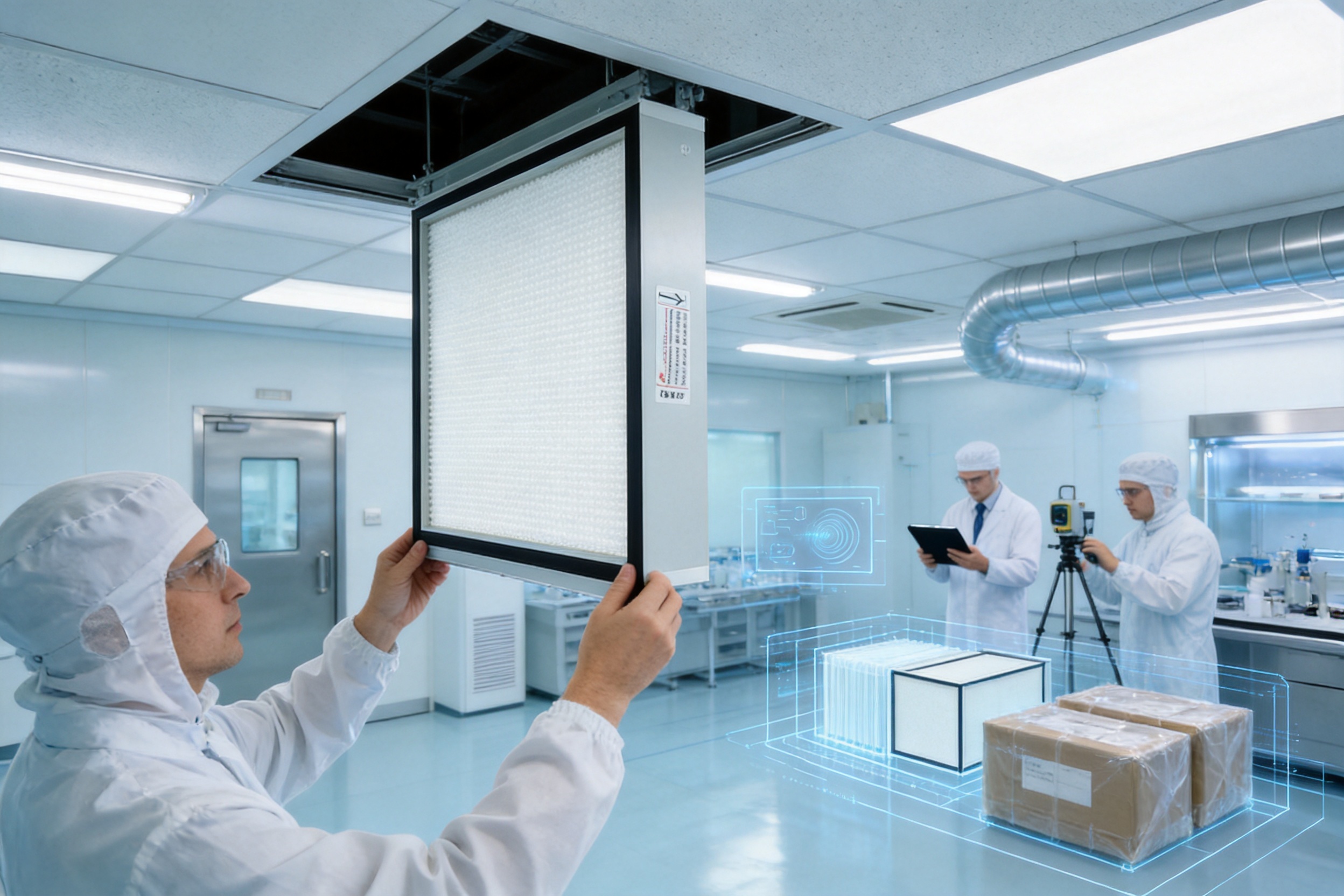
The company’s engineering team has more than 10 years of average on-site experience and supports projects with BIM visualization and full installation services. BIM-based coordination can help identify clashes between terminal filters, lighting, sprinklers, service utilities, ceiling grids, and process equipment before construction begins.
On-site experience is also valuable during installation. Filter protection, handling, gasket inspection, ceiling access, and final testing all require careful sequencing. A filter can be damaged if it is installed too early, exposed to construction dust, or handled without appropriate protection. Installation planning should therefore form part of the project schedule.
Pharma United has delivered projects for multinational pharmaceutical companies and industrial plants in international markets. The company states that it has more than 20 years of industry experience, more than 60 staff members, and a history that developed through related companies and manufacturing operations established in China from 2006 onward. Its Kunshan factory expansion in 2026 further increased production capacity.
These capabilities give customers several practical advantages: one point of technical communication, coordinated drawings, consistent product identification, simplified logistics, and the possibility of obtaining installation support from the same organization that supplied the cleanroom materials.
9. How to Select the Correct HEPA Filter
9.1 Define the Application
The first question is where the filter will be installed and what function it must perform. A terminal ceiling filter, air shower filter, pass box filter, laminar airflow filter, and weighing booth filter may have different dimensional and airflow requirements even when they use similar media technology.
9.2 Confirm Required Efficiency and Standard
The required filter efficiency should be based on the room classification, process requirements, applicable standards, and project validation plan. The specification should identify the testing method and performance basis. Generic claims should be clarified before purchase.
9.3 Calculate Airflow and Pressure Drop
The filter must provide the required airflow without exceeding the available fan capacity. Pressure drop changes as the filter loads with particles, so the design should consider both initial and final resistance. The HVAC designer should verify fan selection, energy consumption, noise, and control range.
9.4 Select the Frame and Seal
Frame material should be suitable for the environment, cleaning method, humidity, corrosion risk, and mechanical requirements. The sealing arrangement must match the housing. A filter with the wrong gasket position may not seal correctly even if its external dimensions appear acceptable.
9.5 Check Dimensions and Maintenance Access
Filter dimensions should be confirmed against approved drawings and the actual housing or ceiling opening. Maintenance access should allow safe removal and replacement without damaging nearby panels, lights, ducts, or equipment.
9.6 Review Documentation
Customers should clarify what documents will be supplied, such as product specifications, dimensional drawings, inspection records, test reports, packing lists, installation guidance, and replacement recommendations. Documentation is especially important for pharmaceutical and healthcare projects.
9.7 Consider Replacement and Lifecycle Cost
The lowest purchase price does not always represent the lowest total cost. A filter with unsuitable pressure drop may increase energy consumption. A poorly sealed filter may compromise room performance. An inconsistent product may create installation labor and maintenance difficulties. Lifecycle evaluation should include energy, replacement frequency, downtime, testing, and disposal.
10. Installation and Commissioning Considerations
HEPA filters should remain protected until the surrounding construction is sufficiently complete and clean. Before installation, the filter should be inspected for shipping damage, torn media, frame distortion, gasket defects, or missing identification.
The housing or ceiling terminal should also be checked. The opening must be clean and dimensionally correct, the mounting surface should be level, and the sealing surface should be free from dust or foreign material. Fasteners should be tightened evenly according to the housing design. Excessive force can deform the frame or gasket.
After installation, the filter and housing should be inspected for visible gaps. The airflow direction must correspond to the marked arrow. Protective films, temporary covers, and packaging materials must be removed in accordance with the installation procedure.
Commissioning may include airflow measurement, room pressure verification, particle counting, filter leakage testing, smoke visualization, and other checks required by the project. The exact test program should be established by the cleanroom validation or commissioning team.
Field testing is important because a factory-tested filter can still be compromised by transportation damage, installation errors, housing leakage, or construction contamination. The final result must be evaluated at the installed location, not assumed from the product name alone.
11. Operation and Maintenance
HEPA filter performance should be monitored as part of the cleanroom maintenance program. Useful indicators may include pressure differential across the filter, room particle levels, airflow volume, room pressure, and the condition of seals and housings.
A rising pressure differential may indicate that the filter is loading with particles. However, replacement should not be based on pressure alone. The facility should consider airflow performance, room classification, testing results, process requirements, and the manufacturer’s recommendations.
Filters should not normally be cleaned by brushing, compressed air, or other methods that could damage the media or release captured particles. If a filter is damaged, leaking, excessively loaded, or unable to meet the required performance, replacement is generally the appropriate action.
Replacement work should be planned to protect the cleanroom and personnel. The area may require shutdown, isolation, controlled access, protective clothing, waste handling, and post-replacement cleaning and testing. Used filters may contain captured substances, so disposal procedures should follow the facility’s safety and environmental requirements.
12. Sustainability and Energy Considerations
Filtration efficiency and energy consumption must be considered together. Air resistance increases the workload on the fan, and a filter with excessive pressure drop can increase operating costs over its service life. Correct sizing, staged filtration, proper maintenance, and efficient fan control can help manage energy use.
Oversized filters may reduce face velocity and pressure drop, but they can also increase material use, ceiling space, and initial cost. Undersized filters may increase resistance and shorten service life. The best design is based on the required airflow, available space, maintenance strategy, and total lifecycle cost.
Durable frames and consistent manufacturing can also reduce waste caused by premature failure or poor fit. Accurate project planning reduces the risk of producing incorrect sizes that cannot be installed. Reusable transport protection, efficient packaging, and organized shipment planning may further reduce material waste.
13. Why an Integrated Cleanroom Partner Matters
Choosing a HEPA filter supplier is also a decision about technical responsibility. When the supplier is involved only after the HVAC and ceiling design are complete, opportunities for coordination may be limited. When the supplier participates from the design stage, filter dimensions, terminal arrangements, access panels, service routes, and maintenance requirements can be reviewed more effectively.
An integrated cleanroom partner can help connect the following elements:
• Filter grade and airflow with the required room classification.
• Filter dimensions with ceiling panels and terminal housings.
• Sealing details with the cleanroom wall and ceiling construction.
• Fan capacity with filter resistance and airflow requirements.
• Equipment filters with air shower, pass box, laminar flow, or weighing booth layouts.
• Factory production with site installation and commissioning schedules.
• Replacement planning with identification, documentation, and spare-parts management.
Pharma United’s combination of manufacturing, engineering, international project delivery, and on-site installation enables this type of coordinated approach. Customers can purchase individual HEPA filters, or they can include the filters within a larger cleanroom design and construction package.
14. Frequently Asked Questions
Q1: What is the main purpose of a HEPA filter in a cleanroom?
A HEPA filter provides high-efficiency final filtration for supply air entering a controlled environment. It removes fine airborne particles and helps the cleanroom maintain its required level of particulate control when combined with correct airflow design, sealing, operation, and maintenance.
Q2: Can a HEPA filter alone make a room clean?
No. A HEPA filter is an important component, but cleanroom performance also depends on room construction, airflow distribution, air changes, pressure relationships, personnel practices, cleaning, material transfer, temperature, humidity, and commissioning. The complete system must be designed and operated together.
Q3: What is the difference between a primary filter and a HEPA filter?
A primary filter normally captures larger particles and protects downstream equipment. A HEPA filter is a high-efficiency final filter designed to remove much finer particles. Using primary and medium filters before the HEPA stage can reduce dust loading and help extend the final filter’s useful service life.
Q4: Is a ULPA filter always better than a HEPA filter?
Not necessarily. ULPA filters can provide higher fine-particle efficiency for specialized applications, but they may also create higher pressure drop and energy demand. The appropriate filter depends on the room classification, process risk, equipment capacity, applicable standards, and total lifecycle requirements.
Q5: Can HEPA filters be customized?
Yes. Depending on the manufacturer and application, customization may include dimensions, frame material, gasket location, sealing method, protective components, labeling, and configuration for equipment such as air showers or laminar airflow units. Custom details should be confirmed through approved drawings and technical specifications.
Q6: How does the filter frame affect performance?
The frame provides structural support and forms the interface with the housing. If the frame is distorted, incorrectly sized, poorly bonded, or inadequately sealed, air may bypass the filter media. Frame accuracy and gasket quality are therefore essential to installed performance.
Q7: What information should be provided when requesting a quotation?
Useful information includes the application, filter dimensions, required efficiency, airflow volume, allowable pressure drop, frame material, gasket arrangement, installation orientation, quantity, delivery location, testing requirements, and any applicable project standards. Drawings or photographs of the housing can also help prevent errors.
Q8: How often should a HEPA filter be replaced?
There is no universal replacement interval. Replacement depends on pressure differential, airflow, particle performance, operating hours, room conditions, process requirements, and test results. A planned maintenance program should define inspection and replacement criteria for the specific facility.
Q9: Should HEPA filters be tested after installation?
Yes. Installed testing can identify leakage caused by transportation damage, incorrect fitting, damaged gaskets, housing problems, or sealing defects. The testing program should be defined by the project commissioning and validation requirements.
Q10: Can the same HEPA filter be used in every cleanroom application?
No. Different applications may require different dimensions, frame materials, airflow volumes, pressure characteristics, sealing methods, and testing arrangements. A terminal ceiling filter may not be suitable for a pass box or laminar airflow unit without design confirmation.
Q11: What makes an integrated manufacturer advantageous?
An integrated manufacturer can coordinate HEPA filters with cleanroom panels, ceilings, HVAC systems, doors, windows, equipment, installation, and commissioning. This can reduce interface problems, simplify communication, improve schedule coordination, and support more consistent project delivery.
Q12: Does Pharma United supply only filters?
Pharma United supplies HEPA filters and also provides broader cleanroom products and services, including cleanroom panels, doors and windows, HVAC systems, equipment, design, manufacturing, and installation. Customers may purchase filters individually or include them in a complete cleanroom engineering solution.
15. Conclusion
HEPA filters are a central element of reliable cleanroom air control. Their function is to remove fine airborne particles from supply air, but their practical value depends on correct selection, accurate manufacture, secure sealing, suitable installation, and disciplined maintenance.
The strongest solution is not necessarily the filter with the most impressive general specification. It is the filter that matches the application, airflow, room classification, housing, maintenance plan, and project validation requirements. Primary and medium filtration should be coordinated with the HEPA stage, while ULPA filtration should be selected only when the application justifies its additional performance and system demand.
Pharma United combines HEPA filter production with cleanroom design, cleanroom material manufacturing, HVAC coordination, equipment supply, international logistics, and on-site installation. Its own factory, broad product range, engineering team, BIM capability, and international project experience provide advantages over an isolated or purely trading-based supply model.
For pharmaceutical factories, laboratories, hospitals, operating rooms, food workshops, electronics cleanrooms, air showers, pass boxes, laminar airflow units, and weighing booths, a properly engineered HEPA filter can support cleaner air, more stable operation, easier maintenance, and stronger project reliability. When filtration is integrated with the entire cleanroom system, the result is a more practical and dependable controlled environment.
References
1. Institute of Environmental Sciences and Technology, Recommended Practices for Testing Cleanrooms and Controlled Environments.
2. International Organization for Standardization, ISO 14644 Series, Cleanrooms and Associated Controlled Environments.
3. European Committee for Standardization, EN 1822 Series, High-Efficiency Air Filters.
4. American Society of Heating, Refrigerating and Air-Conditioning Engineers, Handbook of HVAC Applications.
5. U.S. Food and Drug Administration, Guidance for Industry: Sterile Drug Products Produced by Aseptic Processing.
6. World Health Organization, Good Manufacturing Practices for Pharmaceutical Products.
7. International Organization for Standardization, ISO 9001, Quality Management Systems.
8. International Organization for Standardization, ISO 14698, Cleanrooms and Associated Controlled Environments—Biocontamination Control.
9. Manufacturer technical information for HEPA filters, cleanroom HVAC systems, terminal housings, and clean-air equipment.
Product: HEPA Filter



-
Mobile
+86-177 1554 8238
-
E-mail
chin@pharma-united.com
-
Address
No.58 Beiyuan Road, Dianshanhu Town, Kunshan City, Jiangsu Province, China
Copyright © Pharma United Co., Ltd. Rights Reserved.
OEM/ODM Cleanroom Engineering Solution Manufacturers
